

A commercial kitchen energy audit pinpoints exactly where energy and money are being wasted, from tired fryer seals to oversized ventilation runtimes. Most audits uncover a 10 to 30% saving opportunity, and a large share of that comes from operational fixes rather than new equipment. The first practical step is straightforward: pull 12 months of utility bills and book a walkthrough.
TL;DR:
- Most energy savings come from operational fixes like routine maintenance and staff behavior changes rather than equipment upgrades.
- Conducting a full year of utility billing data is essential to accurately identify peak demand periods and seasonal fluctuations.
- Key systems such as refrigeration, cooking, and ventilation should be closely examined for inefficiencies and potential demand-controlled solutions.
- Quick, no-cost fixes like staff training, cleaning coils, and using power strips can significantly reduce energy consumption immediately.
- Equipment upgrades are most cost-effective when considering lifecycle costs, rebates, and grants, with regular follow-up to ensure ongoing savings.
Table of Contents
- What does a commercial kitchen energy audit examine?
- How do you conduct a commercial kitchen energy audit step by step?
- Which kitchen systems matter most in an energy audit?
- What quick, no-cost fixes cut kitchen energy use immediately?
- When does upgrading equipment make financial sense?
- How do you keep the savings from an audit?
- How Superiorkitchenequipment supports audit follow-through
- What operators get wrong about energy audits
- Turn your audit findings into real savings
- Sources
- FAQ
What does a commercial kitchen energy audit examine?
An audit starts with data, not a clipboard tour of the kitchen. Auditors need a full calendar year of utility statements because kitchen energy demand shifts with seasons, menus, and covers served. A three-month snapshot from a quiet period will understate your baseline and skew every recommendation that follows, so a full year of billing history is the standard starting point for any credible assessment.
Once the bills are in hand, the auditor builds a baseline using several core metrics:
- Electricity use in kWh and gas use in therms, broken down by month
- Energy Use Intensity (EUI), which normalises consumption against floor area so you can compare against sector benchmarks
- Peak demand charges and the load profile showing when demand spikes during service
- Equipment inventory: model numbers, age, and nameplate ratings for every major appliance
Before the auditor arrives, gather utility statements, equipment manuals, maintenance logs, and floor plans showing electrical and gas connections. This groundwork often trims a full day off the on-site visit.
How do you conduct a commercial kitchen energy audit step by step?
A structured audit moves through four distinct phases, and a manager can run most of this without external help if the kitchen is small.
- Pre-audit preparation. Assemble 12 months of bills, equipment lists, and staff schedules. Book the walkthrough for a period that includes both prep and peak service, so the auditor sees real load conditions.
- Walkthrough and spot measurements. Walk every station with a clamp metre to check actual amperage draw against nameplate ratings, and use an infrared scanner on refrigeration door seals, oven casings, and hot-water pipework to spot heat loss. Short-term metering and thermographic scans reveal hidden loads that a visual check alone would miss.
- Submetering and runtime logging. For equipment suspected of running longer than necessary, such as exhaust fans or fryers left on standby, fit a temporary datalogger for a week to capture actual runtime patterns rather than assumed schedules.
- Reporting and prioritisation. Rank every finding by capital cost against annual saving, so the report reads as a payback league table, not a wish list.
Pro Tip: Schedule the walkthrough during your busiest service, not a quiet Tuesday afternoon. Auditors who only see idle equipment miss the demand spikes that drive your peak charges.
Which kitchen systems matter most in an energy audit?
Refrigeration, cooking equipment, and ventilation typically dominate a commercial kitchen’s energy bill, so these deserve the closest inspection.
- Refrigeration: Check door seals for gaps, clean condenser coils quarterly, and confirm setpoints aren’t colder than the product actually requires. Selecting properly sized refrigeration and keeping maintenance current reduces running costs noticeably against ageing units.
- Cooking equipment: Look at preheat habits, whether fryers are left idling between orders, and whether auto-clean or standby modes are actually enabled.
- Ventilation and HVAC: Check whether hoods run at full speed regardless of cooking load. Demand-controlled kitchen ventilation (DCKV) and variable frequency drives (VFDs) let extraction match actual smoke and heat output instead of running flat out all shift.
- Lighting: Fluorescent tubes in prep and storage areas are prime candidates for replacement.
- Hot water and dishwashing: Check pre-rinse spray valve flow rates and dish machine maintenance schedules.
Switching fluorescent tubes to LED can significantly reduce lighting energy use, according to a University of Michigan study, one of the fastest paybacks in any audit report.
What quick, no-cost fixes cut kitchen energy use immediately?
Not every saving requires a purchase order. Some of the largest wins come from habits and housekeeping that cost nothing to implement.
- Train staff on start-up and shut-down checklists so equipment isn’t preheated hours before service or left running overnight.
- Schedule energy-intensive tasks like dishwashing batches outside peak demand windows where your tariff allows.
- Restore lost efficiency with simple maintenance: wipe condenser coils, check door gaskets, and descale water heaters on a fixed calendar.
- Use power strips and zoned lighting controls so unused stations aren’t drawing standby load through service and beyond.
Pro Tip: Put one person’s name against the shutdown checklist each night. Shared responsibility for switching things off usually means nobody does it.
When does upgrading equipment make financial sense?
Compare lifecycle cost, not sticker price, when deciding whether to replace ageing equipment. A cheap fryer that costs more to run for a decade rarely beats a pricier, efficient model on total cost of ownership.
- ENERGY STAR certified dish machines average around $2,250 a year in combined water and energy costs, against roughly $3,750 for conventional models, a gap that shortens payback considerably once you build it into the replacement decision.
- Work the payback two ways: first on the equipment’s full price, then again after applying any available grant support, such as an Energy Efficiency Grant (EEG), which can shorten the payback period substantially by covering a share of the upfront cost.
- Check with your utility and equipment dealer early in procurement. Rebate programmes sometimes stack with grant support to improve the net price further.
How do you keep the savings from an audit?
An audit’s findings only hold if someone tracks them afterwards. Monitor monthly kWh and, where possible, normalise usage against covers served or production volume so seasonal swings don’t mask genuine drift.
- Track runtime hours on major equipment against the baseline established during the audit.
- Use short-term metering again after any capital measure to confirm it delivered the projected saving.
- Keep a maintenance calendar for coil cleaning, gasket checks, and valve inspections, since neglected equipment can lose a small but meaningful amount of its efficiency without anyone noticing.
- Re-audit every two to three years, or sooner after a menu change or major equipment swap.
How Superiorkitchenequipment supports audit follow-through
Superiorkitchenequipment stocks energy-efficient refrigeration, ovens, fryers, and dishwashing equipment across its product collections, built for kitchens acting on audit findings. Its EEG guidance helps buyers understand how grant support changes a replacement’s payback calculation before they commit capital. A showroom visit or consultation is a practical next step once your audit report ranks which upgrades come first.

What operators get wrong about energy audits
The biggest mistake I see is treating an audit as a one-off event rather than an ongoing discipline. A report full of recommendations achieves nothing without staff buy-in, and a facilities manager who owns the shutdown checklist matters more than any single piece of equipment. Expect implementation in stages, not overnight, and build a follow-up check into your calendar before you file the report away.
— David
Turn your audit findings into real savings
Once your audit report ranks the upgrades worth making, Superiorkitchenequipment gives you a practical route to act on it: energy-efficient kitchen equipment paired with direct guidance on claiming grant support, so capital measures don’t sit on a wish list for another year. This specialised approach matches food service operators with equipment that qualifies for grant schemes, helping reduce both the upfront outlay and the ongoing electricity bill.
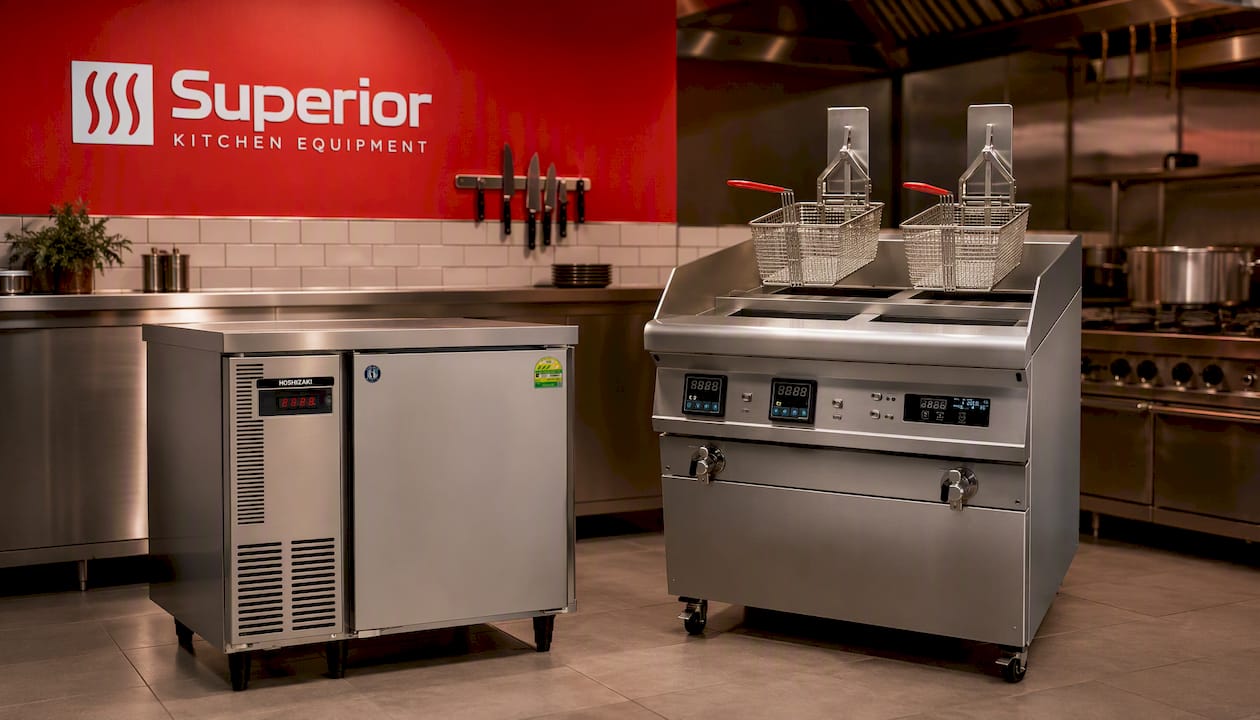
If refrigeration came up as a priority in your audit, the 0.9m Hoshizaki Counter Chiller is worth a look, and kitchens flagging fryer recovery times as an issue should check the Automated Standing Double Deep Fryer. Start by reading the Energy Efficiency Grant (EEG) page to see how much of the cost a grant could cover, then book a showroom visit to see the equipment in person before you order.
Sources
For benchmarking and certified product lists, ENERGY STAR’s commercial food service resources cover checklists, rebate finders, and Portfolio Manager for tracking EUI over time. For water-heating compliance details, the hot water temperature guide for restaurants is a useful companion reference, and the UK small business electricity guide covers operational tips relevant beyond the kitchen floor.
FAQ
What is an energy audit for a commercial building?
An energy audit for a commercial building is a systematic review of energy use across lighting, HVAC, refrigeration, and cooking equipment to identify waste and rank cost-effective improvements. For a commercial kitchen specifically, the audit usually starts with 12 months of utility bills and a walkthrough that includes spot measurements of major equipment.
What are the electrical requirements for a commercial kitchen?
Electrical requirements vary by jurisdiction and equipment load, covering dedicated circuits for high-draw appliances, correct amperage ratings, and adequate ventilation for heat-generating equipment. An audit checks actual amperage draw against nameplate ratings using a clamp metre, which often reveals circuits running closer to capacity than expected.
How do you audit a kitchen for energy use?
Auditing a kitchen starts with gathering a full year of utility bills, then walking the space during service to measure equipment performance with tools like infrared scanners and clamp metres. The findings get ranked into a report by cost against annual saving, so the highest-payback fixes surface first.
What is included in a commercial kitchen energy audit?
A complete audit includes a utility bill baseline, an equipment inventory, spot measurements of refrigeration, cooking, and ventilation systems, and a prioritised list of operational and capital recommendations. Many audits also flag rebate or grant opportunities, such as an Energy Efficiency Grant (EEG), that can shorten the payback on recommended upgrades.