

R290 is refrigerant-grade propane, and it is flammable. Operators who use it safely do four things: buy equipment that meets Singapore’s registration rules, keep the area around the unit ventilated, keep ignition sources away from it, and allow only competent technicians to open the sealed system. This guide sets out those rules and the checks a restaurant owner, caterer or kitchen manager can apply in the premises. It also shows what to look for when buying R290 chillers and freezers. For the buying side, see our R290 commercial refrigerator buyer’s guide.
TL;DR
- R290 is propane. It is classed as a hydrocarbon (HC) refrigerant, with a fire and explosion hazard if it leaks and builds up in an enclosed space.
- In Singapore, the NEA requires suppliers of commercial storage refrigerators using R290 to comply with SCDF requirements. Models carrying 150 g or more of flammable refrigerant need written SCDF approval before the NEA will register them.
- Operators must provide adequate ventilation, remove ignition sources where gas could collect, display flammability warnings and check contractors’ competence.
- No welding, brazing, soldering or cutting may be done on a system that holds or has held HC refrigerant until it is certified free of HC refrigerant.
- Buy registered, MEPS-compliant units from a supplier that can explain the refrigerant, the placement and the service arrangements.
Table of Contents
- What R290 is and why it needs different handling
- What Singapore’s rules require
- What actually goes wrong with R290
- Operator checklist for the kitchen
- Servicing R290 equipment safely
- If you suspect a leak or fire
- Choosing R290 equipment with safety in mind
- Where to buy and what we offer
- Our perspective
- FAQ
- Sources
What R290 is and why it needs different handling
R290 is propane (C3H8) used as a refrigerant. It is a natural hydrocarbon with a very low global warming potential, which is why many manufacturers use it in new commercial chillers, freezers and display cabinets. Under the ISO 817 classification it falls in the A3 group: low toxicity, high flammability. In plain terms, the gas is not poisonous at the levels found in a kitchen, but it can burn or explode if it collects and meets a spark or flame.
Two properties shape every safety rule that follows:
- It has no odour. Pure refrigerant propane cannot be detected by smell, so staff cannot rely on their noses to find a leak.
- It is heavier than air. A release tends to settle low and collect near the floor, in drains, pits and under equipment, rather than rising away.
The quantity is also relevant. A sealed commercial fridge holds a small charge, measured in grams. The hazard rises with the mass of refrigerant that can accumulate: the Fire Protection Research Foundation’s study of Class A3 refrigerants found that ignition probability increases as charge size increases. This is why charge limits, equipment design and room ventilation form the core of the guidelines.
What Singapore’s rules require
Three Singapore bodies are involved, each with a different role.
| Body | Role | What it means for a kitchen |
|---|---|---|
| NEA (National Environment Agency) | Registers regulated energy-using goods under the Energy Conservation Act | Commercial storage refrigerators must be registered and meet the minimum energy performance and labelling requirements |
| SCDF (Singapore Civil Defence Force) | Sets fire safety requirements, including for flammable refrigerants | Standalone commercial refrigeration using R290 must comply with SCDF requirements |
| MOM (Ministry of Manpower) | Workplace safety and health | Occupiers and employers must manage the HC refrigerant hazard at work |
NEA registration and the 150 g threshold
The NEA’s circular on regulated goods, effective 1 April 2025, sets out three points that matter to a buyer:
- Suppliers of commercial storage refrigerators that use R290 must comply with SCDF’s requirements for standalone commercial refrigeration systems.
- The NEA will not register a model carrying 150 g or more of flammable refrigerant without written SCDF approval.
- From 1 April 2025, commercial storage refrigerators must meet the minimum energy performance standard (an energy efficiency index of 95 or lower) and carry the mandatory energy label. A grace period ran to 31 March 2026. From 1 April 2026, regulated goods must be registered with the NEA and meet the prescribed requirements before they are supplied.
The grace period has therefore ended. A unit sold in Singapore today should be a registered model. Ask the supplier for the registration details of the model you are buying, and keep them with the purchase record.
SCDF Fire Code
SCDF’s Fire Code 2013, Appendix 22 has applied since 1 January 2012. It covers flammable refrigerants in ISO 5149 flammability groups 2 and 3, mostly hydrocarbons such as propane, butane and isobutene. It defines commercial refrigeration systems to include chiller rooms, standalone commercial or retail refrigeration equipment and chiller trucks. This is the reason the NEA ties R290 registration to SCDF compliance. Any kitchen that stores perishables, drinks or even a wine selection in a standalone cabinet is within that scope, as in this Singapore guide to serving chilled wine, which shows how common cold storage is in food and beverage premises.
If your plan involves a walk-in chiller room, a refrigerated vehicle or a custom installation rather than a standard registered unit, confirm the requirements with SCDF or your qualified installer before you commit.

MOM’s duties for occupiers and employers
The 2014 joint circular from MOM and SCDF on hydrocarbon refrigerants states that HC refrigerants pose a fire and explosion hazard: wrong handling can create a flammable atmosphere that develops into a fire or explosion. It asks occupiers to:
- provide adequate ventilation so HC refrigerant cannot accumulate indoors;
- remove potential ignition sources from areas where accumulation is possible;
- display flammability warnings at workroom entrances;
- verify the expertise of contractors and the risk assessments they provide.
The same circular asks companies that handle HC refrigerants to make sure workers understand the hazard and can identify the refrigerant from the Safety Data Sheet, which is the supplier’s standard document describing a substance’s hazards.
What actually goes wrong with R290
Understanding the failure modes explains the guidelines. The NFPA research identifies several hazards of an R290 release that ignites: overpressure from rapid expansion of combustion products, thermal radiation, direct flame, and fragments from glass or metal doors when a deflagration (a rapid burn) occurs inside a cabinet. In the store layout it modelled, leaks inside the cabinet accounted for 75% of the total frequency of ignited events.
For a kitchen the practical lessons are:
- A leak inside a closed cabinet is the main scenario, so cabinet design and internal electrical parts matter.
- Airflow reduces risk. The same report found that top-mounted condensing units cut the frequency of ignition events by 1.2 to 2.0 times compared with bottom-mounted units. Running condenser fans 100% of the time cut it by up to 3.2 times compared with 60% fan operation on bottom-mounted units.
- Enclosed spaces with little air movement, such as a small store room, a closed cabinet recess or a pit, are where gas can collect.
The report’s recommendations include limiting charge size according to room volume (in line with EN 378, for example a charge limited to 20 to 25% of the lower flammable limit if the gas mixed evenly through the room), keeping condenser fans running or switching them on when a leak is detected, and using explosion-protected (Ex rated) components inside closed refrigerator cabinets. These are matters for the manufacturer. As a buyer, you can ask which of them the model applies.
Operator checklist for the kitchen
The following routine turns the MOM requirements into daily practice. Use it alongside your own risk assessment.
1. Ventilation
- Do not box a fridge into a recess without airflow. Follow the clearances in the manufacturer’s installation instructions.
- Keep ventilation openings and condenser grilles free of boxes, cling film rolls and grease build-up.
- Do not place R290 units in small closed store rooms unless the installer has confirmed the ventilation is adequate.
The restaurant refrigeration layout guide shows how to plan the line so that both workflow and airflow are covered.
2. Ignition sources
Ignition sources are naked flames, pilot lights, hot surfaces, and electrical parts that can spark. In kitchens, the likeliest sources are gas burners, fryer pilots, chargrills and oven burners. Position R290 units away from them, and make sure gas appliances are installed to Singapore’s standards, as explained in our article on gas installation rules under SS 608.
For servicing, the work area has to be free of ignition sources. That may mean shutting down and isolating nearby cooking equipment before a technician opens the refrigeration circuit. Warn your technician about nearby burners when you book the visit, so that the work is planned and not interrupted on the day.
3. Signage
Display flammability warnings at the entrance of any workroom where HC refrigerant is used or stored, as the MOM circular asks. Keep the manufacturer’s warning labels on the units legible. Do not paint over or remove them.

4. Contractors
The circular asks occupiers to verify contractors’ expertise and risk assessments. Before work begins on a refrigeration unit, ask the contractor:
- whether the technician is trained to work on hydrocarbon systems;
- which gas detector and tools they will use;
- how they will manage ignition sources in your kitchen during the work;
- how the refrigerant will be removed before any heat is applied.
Keep the contractor’s written answers with your records.
5. Fire readiness
R290 safety sits inside general kitchen fire safety. Keep extinguishers serviced, routes clear, and staff briefed. Our summary of the SCDF kitchen fire safety rules and checklist covers the wider requirements.
Servicing R290 equipment safely
Staff should not open a refrigeration circuit. Servicing is work for a trained technician, and the rules are strict because a spark during repair is the classic ignition route.
The MOM and SCDF circular prohibits welding, brazing, soldering or cutting on any system that contains or has contained HC refrigerant until two things have happened: the refrigerant has been removed safely, and a competent person has certified the system free of HC refrigerant. It also asks for flame-proof equipment where there is a risk of accumulation.
For your own information, this is what good technician practice looks like. Trade reporting from the US, in ACHR News on working safely with HC refrigerants, describes the following steps:
- ventilate the area and keep a fire extinguisher at hand;
- run a flammable gas detector before entering and throughout the work;
- post a sign warning of flammable gas;
- purge the system with oxygen-free dry nitrogen before brazing;
- confirm the detector has stayed silent for at least two minutes after any venting before continuing.
Because hydrocarbon refrigerant has no smell, the detector does the job your nose cannot. Refrigerant should be recovered, not released to the air, and recovery on R290 needs methods suited to a flammable gas. Leave that to the technician.
Between visits, the six-point commercial refrigeration maintenance checklist lists what kitchen staff can check themselves: door gaskets, condenser cleaning, temperature logs and drain lines. None of these involves opening the sealed circuit. Daily temperature logging also helps, and the commercial fridge temperature guide gives the ranges for Singapore kitchens.
A short service record for each unit is worth keeping. Note the date, the technician, what was done and any observations about the unit’s condition. If a fault appears, the record tells the next technician what has been done before.
If you suspect a leak or fire
Signs of a refrigerant leak can be subtle: the unit stops cooling, a hissing sound is heard from the cabinet, or a gas detector in the room alarms. Because propane has no odour, do not rely on smell.
Transport Canada’s CANUTEC guidance on refrigerants gives general emergency steps that fit a kitchen:
- Small leak: ventilate by opening doors and windows and remove ignition sources.
- Large leak or any refrigerant fire: do not try to put the fire out, call the fire department, evacuate, and keep a safe distance.
In Singapore, call 995 for fire and rescue. Evacuate staff and customers first. Do not switch lights or equipment on or off in the affected area, because a switch can spark. Once the situation is safe, have the unit inspected by a qualified technician before use.
Write these steps on a card near the kitchen exit and brief new staff on them in their first week.
Choosing R290 equipment with safety in mind
The safest R290 unit is a registered, properly specified unit installed in a suitable position. When you compare models, use this list:
- NEA registration and energy label. A commercial storage refrigerator should be a registered model that meets the minimum energy performance standard.
- Refrigerant type and charge. Ask which refrigerant the model uses and how much it carries. The 150 g figure in the NEA circular is the point at which SCDF approval becomes necessary for registration.
- Installation requirements. Check the clearance and ventilation the manufacturer specifies against the space you have.
- Service arrangements. Confirm who services the unit and that the technician is trained for hydrocarbon systems.
- Warranty and documentation. Keep the manual, labels and registration details together.
Energy performance matters for the same purchase. The guide to MEPS-verified efficient commercial fridges explains the payback side, and our comparison of R290 and R134a sets out how the refrigerants differ for commercial kitchens.
Where to buy and what we offer
Superior Kitchen Equipment supplies commercial refrigerators, chillers and freezers for restaurants, caterers, food manufacturers and new food businesses in Singapore, and our range also covers energy-efficient equipment for which businesses can claim government grants of up to 70% of the original cost. You can compare the range online at commercial fridges, chillers and freezers, or visit the showroom to see the units in person. For counter-height storage on the line, see the 1.8m Hoshizaki counter freezer.
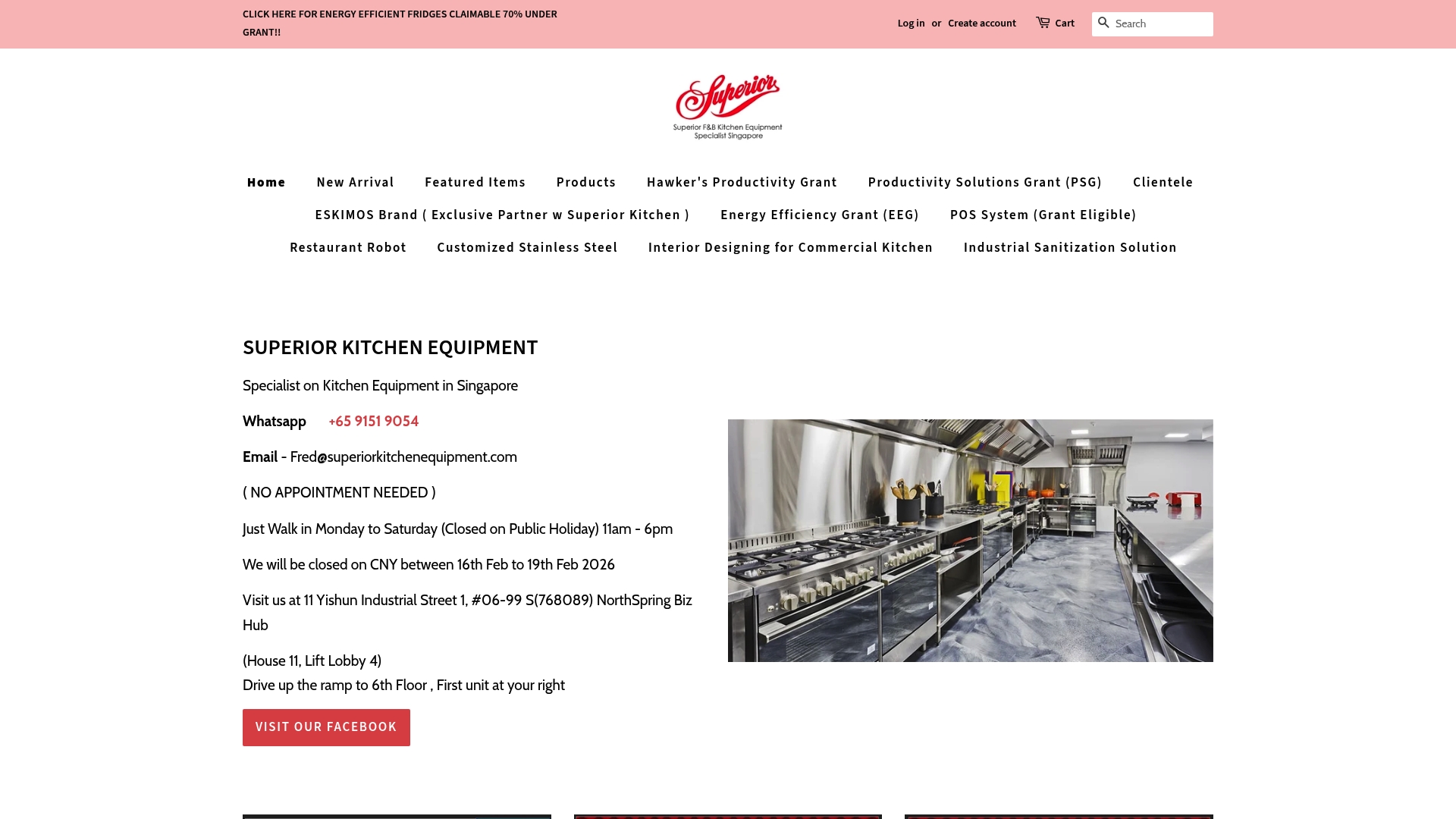
When you enquire, bring your kitchen layout, the position of gas appliances and the ventilation available. This lets the model be matched to the space before you order.
Our perspective
Most R290 incidents in commercial kitchens start with the same question that was never asked: where will this unit stand, and what is next to it? A fridge is bought on capacity and price, then placed wherever there is a gap, often beside a gas burner or inside a recess with no air.
We advise owners to settle placement before purchase. Measure the space, note the gas appliances, and choose a registered model that fits. A properly specified unit also gives you the energy benefits that make the purchase worthwhile: lower electricity bills, and for eligible energy-efficient equipment, grants of up to 70% of the original cost.
Safety and efficiency are not competing goals. A registered, correctly placed and properly maintained unit does both jobs, and it is the approach we recommend to every kitchen we supply.
David
FAQ
Is R290 legal to use in commercial refrigerators in Singapore?
Yes, within conditions. The NEA requires suppliers of commercial storage refrigerators that use R290 to comply with SCDF’s requirements for standalone commercial refrigeration systems. Models with 150 g or more of flammable refrigerant need written SCDF approval before the NEA will register them. Since 1 April 2026, regulated goods must be registered before supply.
Can kitchen staff top up or repair an R290 fridge?
No. The sealed circuit should only be opened by a trained technician. MOM and SCDF prohibit welding, brazing, soldering or cutting on a system that holds or has held HC refrigerant until the refrigerant is removed safely and a competent person certifies the system free of it. Staff can clean condensers, check gaskets and log temperatures.
Can I smell an R290 leak?
No. Refrigerant-grade propane has no odour, so a leak can go unnoticed by smell. Watch for a unit that stops cooling or makes a hissing sound, keep the area ventilated, and have a technician use a gas detector during any service work.
Does R290 need a special room or ventilation?
It needs adequate ventilation so that gas cannot accumulate. The MOM circular asks occupiers to ventilate and to remove ignition sources where accumulation is possible. Follow the clearances in the manufacturer’s instructions, and avoid closed, unventilated recesses or small store rooms.
What should I do if I suspect an R290 leak?
For a small leak, open doors and windows and remove ignition sources. For a large leak or any fire, evacuate, call 995 and do not attempt to fight the fire. Have a qualified technician inspect the unit before it is used again.
Sources
- MOM and SCDF joint circular on safe handling and use of hydrocarbon refrigerants
- NEA circular on regulated goods under the Energy Conservation Act, effective 1 April 2025
- SCDF Fire Code 2013, Appendix 22: restriction on use of flammable refrigerants
- Fire Protection Research Foundation: Class A3 refrigerants study
- ACHR News: working safely with HC refrigerants
- Transport Canada CANUTEC: refrigerants and associated risks
- Singapore guide to serving chilled wine