

The core induction cooktop maintenance routine is fixed: a daily surface wipe and vent check, a monthly fan and filter inspection, and an annual service by an authorised technician. Skip any one of these three and heavy-use units fail faster, usually at the worst possible service.
If a unit trips, sparks, or takes a heavy spill mid-shift, act in this order:
- Power down at the control panel, then isolate at the wall or breaker if there’s any smoke, smell, or visible damage.
- Wait until the cooling fan stops completely before touching the surface or opening any panel.
- Document the fault: time, error code (if shown), what was cooking, and who was on the station.
- Do not attempt a jet-wash or acid cleaner on the affected area, even to “get it back in service” quickly.
Pro Tip: A £0 fix that manufacturer manuals repeat constantly: never use a high-pressure hose or acidic cleaner on the cooking zone, since manufacturer guidance links this directly to nickel-chromium layer damage and electronic failure.
Key Takeaways
Consistent daily, weekly and monthly checks prevent the majority of commercial induction faults that would otherwise require an emergency service call.
| Point | Details |
|---|---|
| Follow the three-tier routine | Daily surface wipe and vent check, monthly fan and filter inspection, annual authorised service. |
| Never use jet washers or acids | Both cause corrosion and electronic failure that isn’t covered under most warranties. |
| Audit cookware monthly | Magnet-test and flatness-check pans, since warped or non-magnetic cookware triggers repeated fault codes. |
| Keep a simple maintenance log | Record date, operator, work done, fault codes and technician stamps to protect warranty claims. |
| Upgrade with heavy-use models | Superiorkitchenequipment’s Standing Induction Cooker, Standing Induction Wok Range and Heavy Duty Kwali Induction are built for daily commercial load. |
Table of Contents
- Daily induction cooktop maintenance checks after every shift
- What weekly and monthly checks catch that daily cleaning misses
- Which induction cooktop cleaning methods are safe for the surface?
- How much clearance does an induction cooktop need for airflow?
- What do common induction cooktop error codes mean?
- Why preventive servicing and proper records save money
- How to properly calibrate an induction cooktop for optimal performance
- What safety precautions matter most during maintenance work
- What the manuals don’t tell you about running these units daily
- Reliable commercial induction options from Superiorkitchenequipment
- Frequently asked questions
- Sources
Daily induction cooktop maintenance checks after every shift
Grease and starch left overnight bake onto the surface under residual heat, and that’s where most avoidable damage starts. Manufacturer manuals are explicit that units need daily cleaning to prevent both fire risk and corrosion of the cooking surface’s protective layer. Build the closing routine around these steps:
- Switch off and let the surface cool to warm, not cold. A slightly warm glass surface lifts grease more easily than a stone-cold one.
- Wipe with a microfibre cloth and an induction-safe cleaner or mild soap solution. Never use steel wool or a metal scraper.
- Lift stubborn spots with a plastic scraper held at a shallow angle, not scraped straight down.
- Check the vent grilles and fan intake for visible blockage or grease film.
- Test the control panel, display, and power lead for cracks, scorching, or looseness.
- Log the shift: time, operator name, any fault codes, and any visible damage, however minor.
Pro Tip: Give one named person per shift ownership of the close-down log. Kitchens that rotate this duty randomly lose the paper trail exactly when a warranty claim needs it.
What weekly and monthly checks catch that daily cleaning misses
Daily wiping protects the surface. Weekly and monthly checks protect what’s underneath it, and that’s where the expensive failures start.
Each week, someone should:
- Clean vent grilles properly, not just wipe visible dust, since packed grease behind the grille restricts airflow long before it’s obvious.
- Listen for changes in fan noise. A louder, straining fan is an early warning of a clogged intake or a failing bearing.
- Check grounding connections and cable condition, especially on units that get moved or cleaned around frequently.
Each month:
- Inspect and, where the unit has one, replace the air filter under the furnace bottom. Manufacturer schedules commonly call for replacement or cleaning every two months under heavy use.
- Test fan performance under load and check for grease ingress inside the housing.
- Run a cookware audit: magnet-test pans (induction needs a magnetic base), check they sit flat with a straight edge, and confirm pan size matches the cooking zone. Warped or non-magnetic cookware is a leading cause of repeated error codes and premature component wear.
Which induction cooktop cleaning methods are safe for the surface?
The microcrystalline glass top and the electronics beneath it need gentler handling than most commercial kitchen surfaces. Get this wrong and you’re paying for a service call that daily discipline would have prevented.
Use:
- Microfibre cloths for daily and stubborn-residue cleaning.
- A plastic scraper, never metal, for burnt-on food.
- An induction-safe cleaner or a mild soap and warm water solution, applied lightly rather than flooded on.
- A full, dry finish. Standing water at the edges of the cooking zone works its way toward seals over time.
Avoid entirely:
- Acid-based cleaners and abrasive powders, which strip the surface’s protective layer and accelerate corrosion.
- Metal scourers or scrapers, which scratch the glass and create grooves where grease collects.
- High-pressure water jets or hose-downs. This is the single most common cause of catastrophic failure on commercial units, because moisture forced past seals during jet washing is a frequent cause of irreversible electronic failure.
For genuinely stubborn residue, warm the surface slightly first rather than scraping it cold. An induction-safe paste applied with a plastic scraper, worked gently rather than forced, lifts most burnt sugar and starch without marking the glass. Finish with a clean, dry microfibre pass. If a mark still won’t shift after two attempts, stop. It’s a job for the next scheduled deep clean or the servicing technician, not a reason to reach for something stronger.
Pro Tip: Keep a dedicated, colour-coded cloth just for induction surfaces. Cloths shared with grill or fryer stations carry grit and oil residue that scratches glass over time.
How much clearance does an induction cooktop need for airflow?
Induction units cool themselves with an internal fan drawing air across the power electronics, and that airflow is the single biggest factor in unit longevity that gets ignored under kitchen pressure. Block the vents with a stacked tray, a wedged bin, or a wall placed too close, and the internal components run hotter every service until something fails.
Follow the clearance distances stated in the unit’s installation manual, not a rough estimate, since spacing varies by wattage and model. As a working principle: keep every vent grille fully unobstructed, never store anything against the side or rear intake, and never install a unit flush against a wall with no gap for airflow. Manufacturer guidance ties unobstructed airflow directly to preventing IGBT overheating and premature component failure, which is the fault that most often ends in a full power module replacement rather than a simple repair.
Electrically, check monthly that:
- Grounding points are secure and free of corrosion.
- The power supply is stable, with no flickering displays under load.
- Terminals aren’t loose, and connectors show no scorching or discolouration.
- Cable insulation is intact along its full length, not just at the plug.
Call a certified electrician or an authorised technician immediately if you suspect internal moisture after any liquid contact, if voltage faults recur after a reset, or if a unit overheats repeatedly despite clear vents. These are not staff-level fixes.
What do common induction cooktop error codes mean?
Most fault codes fall into three categories, and knowing which one you’re dealing with saves a wasted call-out.
- “No pot” or pan-detection errors. Check the cookware first: is it magnetic, flat, and correctly sized for the zone? This is the most frequent false alarm and needs no technician.
- Overheating or IGBT warnings. Power down, clean the vents and filter, and let the unit cool fully before restarting. If the warning recurs within the same shift, stop using the unit.
- Voltage or supply-related codes. Check the mains supply and connections before assuming a unit fault. A shared circuit under heavy kitchen load can trigger these intermittently. Guides that catalogue commercial fault codes note distinct codes for pan detection, overheating and supply faults, each with a different first response.
A single reset is reasonable once. If the same code returns after a clean restart, stop using the unit rather than cycling power repeatedly, which can mask a developing electronics fault. Record the exact code, what was on the hob at the time, and anything unusual in the preceding hour: a spill, a power flicker, an unusually long service run.
Before calling for service, isolate the unit safely and move that station’s workload elsewhere. Give the technician the fault code, the load at failure, and the maintenance log for that unit. This turns a vague callout into a fast diagnosis, and it’s often the difference between a component swap and a full unit replacement.
Why preventive servicing and proper records save money
An annual service by an authorised technician, on top of the daily, weekly, and monthly checks already covered, is the schedule manufacturer manuals actually recommend, and it’s the one most kitchens quietly skip once things seem fine. That’s the expensive mistake. Preventive maintenance is consistently cheaper than reactive repair in high-use kitchens, because small issues like fan drag and grease ingress compound rapidly under heavy load rather than staying minor.
A maintenance log doesn’t need to be complicated. It needs six fields, filled in consistently: date, operator, work done, any fault code, parts replaced, and a technician stamp for professional visits. A short standard log with fault-code entries and technician stamps materially speeds warranty service, because it gives a technician the diagnostic trail instead of a guessing game.
Kitchens that keep even a basic log rarely lose a warranty argument over “lack of evidence of proper care.” The ones that don’t keep one are the same ones paying full price for repairs that should have been covered.
Superiorkitchenequipment’s showroom lets buyers see build quality on units like the Standing Induction Cooker firsthand before committing, which matters when servicing costs are part of the total ownership picture, not just the purchase price.
How to properly calibrate an induction cooktop for optimal performance
Calibration on a commercial induction unit isn’t a single dial you set once. It’s a combination of power-zone matching, sensor accuracy, and cookware fit, and getting any of the three wrong shows up as uneven heating or nuisance fault codes long before it becomes a breakdown.
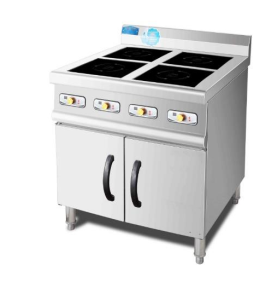
Start with the pan-detection sensor. Most commercial units recalibrate automatically each time a compatible pan is placed and centred on the zone, so a flat, correctly sized, magnetic pan is the real calibration tool here, not a settings menu. If heating feels uneven or the unit struggles to detect cookware that passed the magnet test, check that the pan base sits fully flat against the glass with no warping at the edges, since even slight distortion throws off sensor readings.
Power-level response is the second element. Run each zone through its full range from low to high during a quiet period and note any zone that lags, surges, or cuts out before reaching top power. That’s usually a fan, filter, or IGBT issue rather than a calibration fault, and it’s worth ruling out mechanically before adjusting anything electronically.
Where a unit has adjustable timer, sensor sensitivity, or temperature-probe settings, these should only be changed following the manufacturer’s specific instructions for that model, since incorrect adjustment here can trigger the same overheating protections covered in the ventilation section above. If a zone consistently underperforms after cookware and airflow checks pass, that’s a signal for the authorised technician’s next visit rather than a setting to keep nudging.
What safety precautions matter most during maintenance work
Maintenance tasks on live commercial kitchen equipment carry real risk, and the biggest one isn’t the obvious electrical hazard. It’s staff getting comfortable with a “quick clean” while a unit is still powered or still hot.
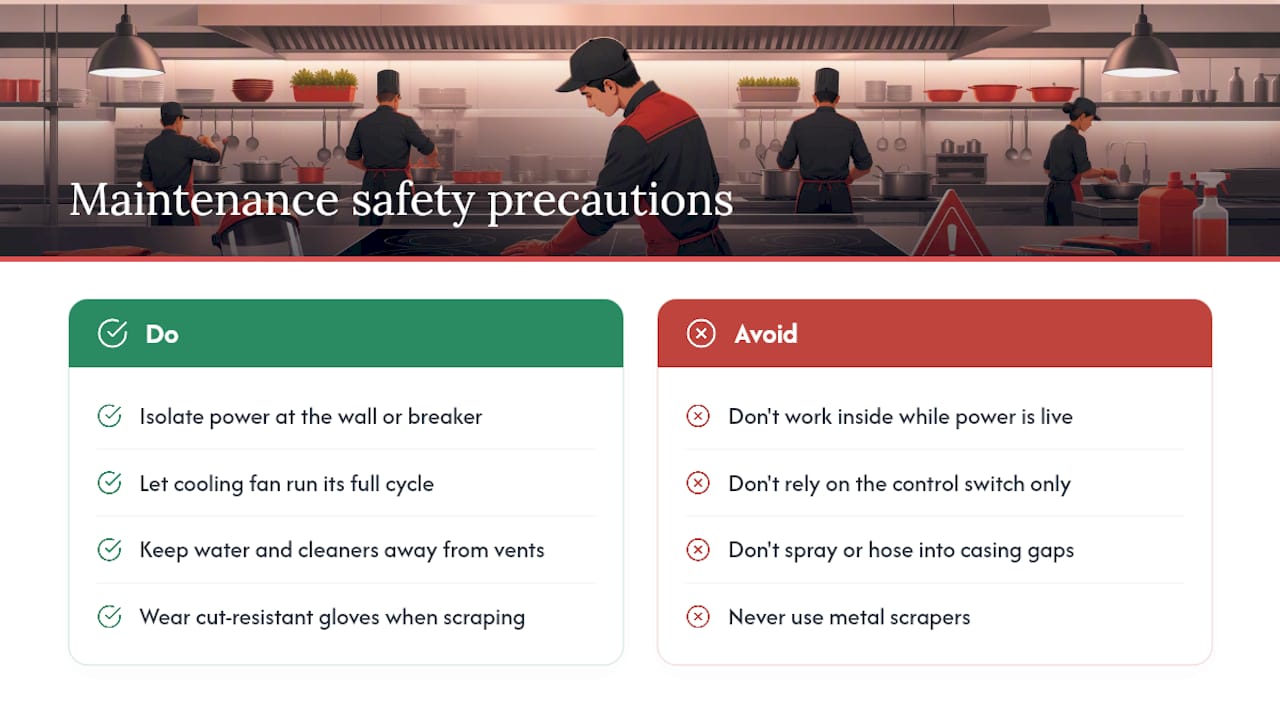
Always isolate power at the wall or breaker before opening any panel or attempting anything beyond a surface wipe, not just switching off at the control panel. The control panel switch doesn’t fully de-energise internal components on every model, and a technician-level task performed with power still live is how avoidable injuries happen.
Let the cooling fan run its full cycle and stop naturally before cleaning near vents or handling the surface after heavy use. Induction surfaces don’t glow when hot the way traditional hobs do, which makes them deceptively easy to touch too soon.
Keep water and cleaning solution away from vents, seams, and the control panel edge at all times, and never point a hose or spray bottle directly at any gap in the casing. This is the same moisture-ingress risk that causes long-term electronics failure, but in the short term it’s also a shock hazard if the unit hasn’t been properly isolated.
Wear cut-resistant gloves when using a plastic scraper on stubborn residue near the edge guards, and never use a metal scraper under any circumstance, including “just this once” for a badly burnt spot. Finally, any task beyond the daily and monthly checklist already covered, panel removal, internal cleaning, or component inspection, belongs to a certified electrician or authorised technician, not kitchen staff working from memory of how it’s usually done.
What the manuals don’t tell you about running these units daily
Manufacturer manuals are thorough on what not to do, acids, jet washes, abrasives, but thin on what actually happens in a kitchen running six services a day, seven days a week. That gap is where most commercial induction problems actually originate, not from staff ignoring the rules, but from nobody translating the rules into a shift-level habit.
The conventional advice treats maintenance as a technician’s job that happens periodically. In a high-turnover kitchen, that framing fails, because the damage that ends in a service call almost never happens during the annual visit. It happens gradually, across dozens of shifts, from a vent nobody checked, a pan nobody magnet-tested, a log nobody kept. The annual service catches what’s already gone wrong; the daily and monthly habits are what stop it going wrong in the first place.
If there’s one priority for a kitchen manager reading this, it’s the log, not the cleaning products. Cleaning technique matters, but it’s teachable in five minutes. A consistent log is a discipline problem and the one thing that protects warranty claims, shortens technician visits, and reveals patterns (the same fault code every third Friday, say) that a memory-based approach never catches.
Reliable commercial induction options from Superiorkitchenequipment
Once the maintenance routine is solid, the equipment underneath it still needs to earn its keep, and heavy daily use eventually surfaces the difference between a unit built for domestic occasional cooking and one built for six services a day.
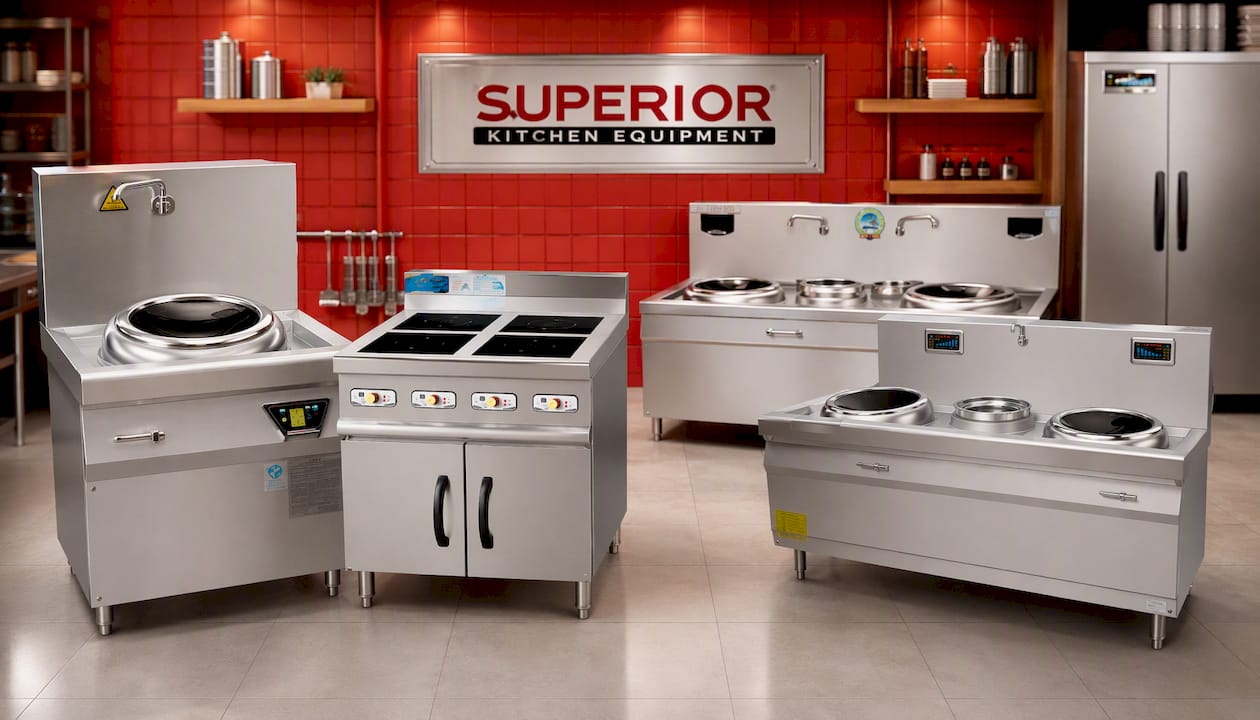
The Standing Induction Cooker suits general high-volume line cooking where floor-standing stability and consistent power delivery matter most. For wok stations running constant high-heat searing and stir-frying, the Standing Induction Wok Range is built for that specific heat profile and cookware shape. Kitchens running heavy frying or large-format kwali cooking should look at the Heavy Duty Kwali Induction, designed for sustained high-output use without the component strain that shortens the life of lighter-duty units.
Every unit can be seen and tested in person at the Superiorkitchenequipment showroom before purchase, and the team can talk through service support and warranty terms at the same visit. Book a showroom visit or request a service quote to see which model fits your kitchen’s actual shift pattern, not just its spec sheet.
Frequently asked questions
How often should a commercial induction cooktop be professionally serviced? At least once a year by an authorised technician, alongside the daily and monthly checks staff carry out themselves. High-volume kitchens running multiple services daily often benefit from a mid-year check as well.
Can I use a pressure washer to clean an induction cooktop? No. High-pressure water jets force moisture past seals and into the electronics, a leading cause of irreversible failure covered in every major manufacturer manual.
Why does my induction cooktop show a “no pot detected” error with a pan on it? The pan is likely non-magnetic, warped, or too small for the zone. Run a magnet test and a flatness check before assuming a unit fault.
What’s the difference between a Standing Induction Cooker and a Standing Induction Wok Range? The Standing Induction Cooker suits general high-volume line cooking, while the Standing Induction Wok Range is shaped and powered specifically for wok-based high-heat cooking styles.
How do I know if an induction cooktop fault needs a technician rather than a reset? If a fault code returns after a clean restart and full cool-down, or if you suspect moisture has entered the unit, stop using it and call an authorised technician rather than repeating resets.
Sources
- Commercial Induction Series User Manual
- How to Maintain Commercial Induction Cooktop | A Full Guide – atrxid