
Hold potentially hazardous food at a minimum internal temperature of at least 135°F. Anything below that sits in the danger zone, where bacteria multiply fastest, and the clock starts running immediately. Food held between 41°F and 135°F for more than 2 hours needs reheating or discarding; beyond 4 hours, discard it regardless of what corrective steps you attempt. Check probes now, and label anything running on time control.
TL;DR:
- Food must be held at or above 135°F to prevent rapid bacterial growth; temperatures below that are dangerous and require immediate attention.
- Regularly check internal temperatures every two hours using a calibrated probe, especially for dense, large, or hot holding units.
- Food exposed to the danger zone for over four hours must be discarded, with timing clearly labeled if used as a control measure.
- Equipment like steam tables and bain marie units need frequent water level and temperature checks to maintain safe holding conditions.
- Assign a specific staff member responsible for monitoring, logging, and managing hot holding to ensure consistent compliance and quickly address issues.
Table of Contents
- What is the minimum hot holding temperature and why does the danger zone matter?
- How often should you check hot holding temperatures?
- What are the 2-hour and 4-hour rules for hot holding?
- Which hot holding equipment keeps food in range reliably?
- How do you build active managerial control into hot holding?
- Common hot holding mistakes and how to fix them
- Why energy-efficient hot holding equipment matters
- Practical product suggestions from Superior Kitchen Equipment
- Sources
What is the minimum hot holding temperature and why does the danger zone matter?
Food safety authorities set 135°F as the safety floor for hot holding because bacterial growth accelerates sharply below that threshold. The Georgia Department of Agriculture states that hot-holding equipment must be capable of maintaining food at or above a temperature commonly set near 135°F, a standard echoed across most food-safety codes. Georgia Dept Agriculture This isn’t an arbitrary number. It marks the point at which the bacteria responsible for most foodborne illness, including Salmonella and Clostridium perfringens, struggle to reproduce at pace.
The danger zone runs from approximately 41°F to 135°F. Time spent in that range is cumulative, not reset by a brief dip and recovery, which is why a steam table left unattended for even 90 minutes can quietly compromise a whole batch of food.
There’s also a quality ceiling. Operators often treat maximum heat as maximum safety, but food held well above 165°F dries out, overcooks and loses texture fast. Operational experts generally frame the workable hot-holding range as roughly 135°F to 165°F: safe at the bottom, still edible at the top.
- Below 135°F: unsafe, danger-zone clock running
- 135°F to 165°F: safe operating range
- Above 165°F: safe but degrades food quality
How often should you check hot holding temperatures?
Measure internal temperature with a calibrated probe thermometer, not a surface reading, and insert it into the thickest or densest part of the item. The WFA’s guidance on temperature and food safety recommends checking hot-held food at least every 2 hours, giving staff enough warning to correct a slipping unit before food crosses into unsafe territory.
- Insert the probe into the centre of the thickest cut for roasts and joints, not near the bone or surface.
- Stir soups and sauces before probing, then check the middle of the pot, where heat distributes unevenly.
- Probe the centre of large rice or pasta batches, where compacted layers trap cold pockets.
- Check multiple points across wide bain marie pans rather than relying on a single reading.
- Record every reading on a signed temperature log immediately, not at the end of shift.
Verify your probe’s accuracy weekly using an ice bath (should read 32°F/0°C) or a boiling-point check (212°F/100°C at sea level). A drifting thermometer gives you false confidence right up until an inspection or an outbreak proves it wrong.
Pro Tip: Keep a spare, freshly calibrated probe at the pass. A thermometer left in a hot cabinet all shift can drift by several degrees, and you won’t know until you cross-check it.
What are the 2-hour and 4-hour rules for hot holding?
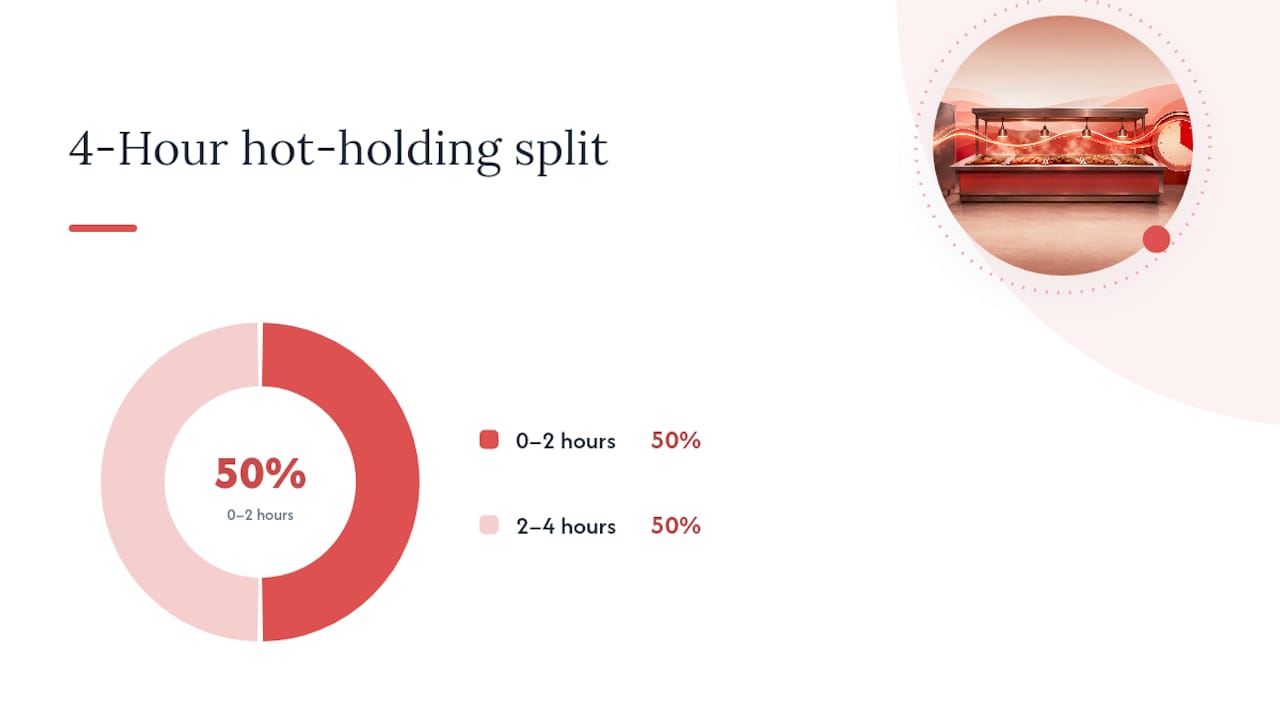
Once food drops below 135°F, you’re on the clock, and that clock doesn’t pause. The Environmental Public Health Act guidance sets a hard ceiling: any temperature-controlled-for-safety food held outside proper conditions must be discarded within a maximum of four hours, with the discard timer starting the moment it left safe holding. EPHA 4-hour rule
The corrective action depends entirely on how long the food has been exposed:
- Under 2 hours in the danger zone: reheat to 165°F (74°C) and return it to hot holding.
- Between 2 and 4 hours: serve immediately or discard. Reheating is no longer an acceptable fix at this stage.
- Beyond 4 hours: discard, full stop, no exceptions regardless of how the food looks or smells.
When you’re deliberately using time as the control, for a buffet line or an event where continuous monitoring isn’t practical, label the container with a clear discard time and the name of the staff member who set it. Without that label, nobody downstream can make a safe call.
Which hot holding equipment keeps food in range reliably?
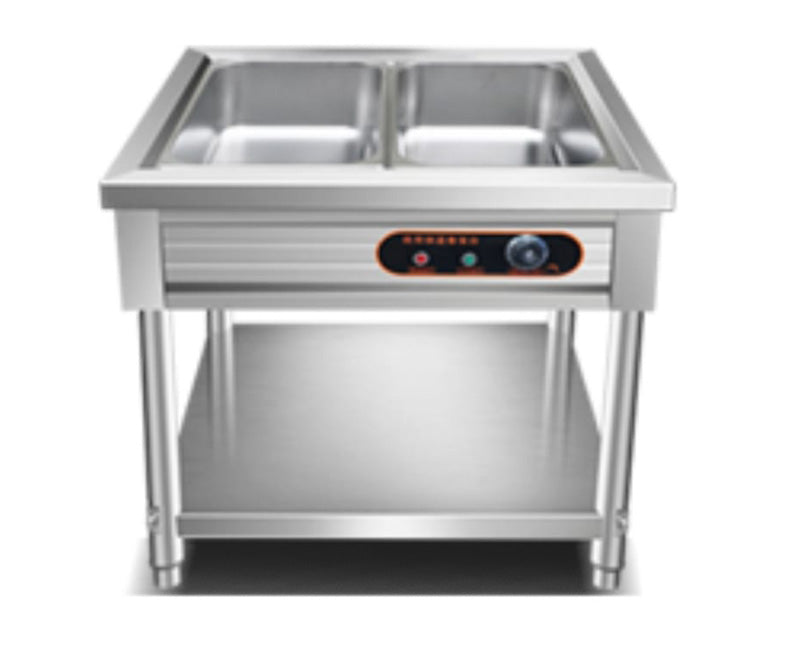
Steam tables, bain marie units, warming cabinets and chafing dishes all hold heat differently, and each demands its own checks. Steam tables and bain marie wells rely on hot water, so evaporating water is a frequent, silent cause of failure. Check levels at the start of service and hourly afterwards, topping up before the water line drops below the food pans.
Chafing dishes and open buffet setups are inherently less stable than commercial steam tables. The USDA’s danger zone guidance notes that buffet-style equipment needs more frequent monitoring precisely because it’s more exposed to ambient temperature swings and lid-opening losses.
Stir thick or dense items regularly. Gravies, curries and rice batches develop cold spots where heat can’t circulate, and a probe reading from the wrong spot will tell you everything is fine when it isn’t.
- Check water levels and refill before service and every hour during service.
- Keep lids closed between servings to limit heat loss.
- Avoid overloading pans; dense, tightly packed food holds heat unevenly.
- Stir soups, sauces and grains to eliminate cold pockets.
For continuous service where staff can’t monitor every 30 minutes, equipment with active temperature control, like a bain marie warmer, is the safer bet over relying on time-as-control alone. Multi-well units, such as a 3-hole bain marie, also help by letting you separate dense items from liquid-based dishes rather than cramming everything into one well.
Pro Tip: A unit that “looks” hot on the surface can still be running cold at the core. Trust the probe, not the steam you see rising off the pan.
How do you build active managerial control into hot holding?
Rules on paper don’t keep food safe; assigned responsibility does. Name a specific person accountable for each hot-holding unit on every shift, not a vague team responsibility that nobody actually owns.
- Assign one named staff member per unit per shift, responsible for checks and logging.
- Log the item, the time it was placed into holding, probe readings every 2 hours, any corrective action taken, and a signature.
- Train every team member on correct probe placement, cleaning between uses, and reading calibration drift.
- Train staff on labelling practice for time-as-control items, including how to write a legible discard time.
- Review logs weekly to catch recurring equipment or shift-pattern problems before they become violations.
This kind of active managerial control turns a food-safety code into daily habit rather than an annual inspection scramble.
Common hot holding mistakes and how to fix them
A hot surface with a cold core is the classic failure sign, usually caused by overloading a pan or letting steam-well water evaporate unnoticed. Watch for these symptoms and act fast:
- Cold centre, hot surface: stir immediately and re-probe the centre; if still under 135°F and under 2 hours, reheat to 165°F.
- Evaporated steam-well water: refill immediately and re-check temperature before continuing service.
- Failing unit mid-service: transfer food to a working unit or apply time-as-control with a clear label.
- Unlabelled, unknown holding time: when in doubt about how long food has been out, discard rather than guess.
Why energy-efficient hot holding equipment matters
Safe hot holding and lower running costs aren’t competing priorities. Energy-efficient warming equipment holds a steady 135°F to 165°F range with less electricity drawn over a full service, which matters when steam tables and bain marie units often run for 10 or more hours a day. Businesses upgrading to efficient models can also claim grants covering a meaningful share of the purchase cost, alongside real reductions on electricity bills. If you’re weighing equipment options, visiting a showroom to see units running under real service conditions tells you far more than a spec sheet ever will.
— David
Practical product suggestions from Superior Kitchen Equipment
Getting hot holding right depends as much on the equipment as it does on the log sheet, and that’s where Superiorkitchenequipment fits into your compliance plan. The Standing Bain Marie 2 Hole Warmer suits smaller kitchens running two or three hot dishes at once, holding a steady temperature without the water-level surprises that plague older units.
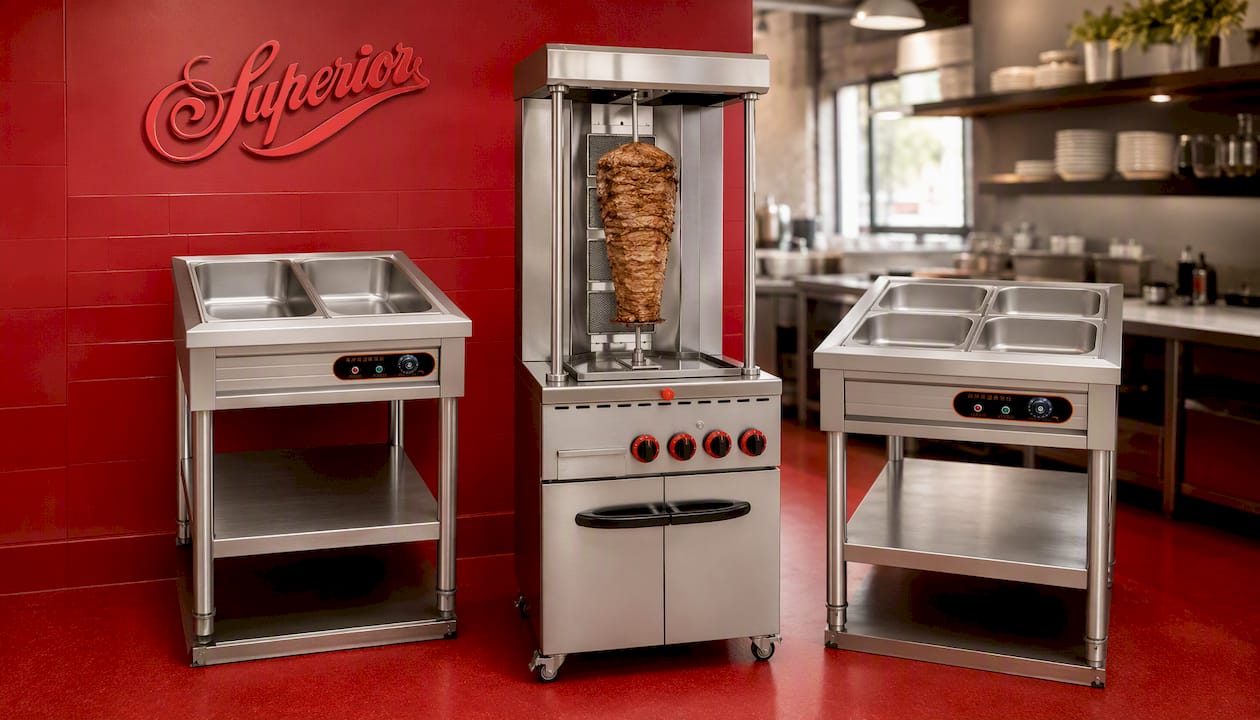
For higher-volume service, the Standing Bain Marie 4 Hole Warmer gives you the extra wells to separate dense items like rice from liquid sauces, cutting the cold-spot risk we’ve covered above. Running a kebab or skewer-based menu instead? The Standing Gas Kebab Machine holds consistent heat for that specific service style, where a standard bain marie isn’t the right fit.
Every unit qualifies for the same energy-efficiency grant support mentioned above, so the upfront cost is rarely what it first looks like. Visit the showroom to see these units running, get help matching a model to your service volume, or head to the product pages linked here for full specifications and pricing.
Sources
- Environmental Public Health Act (Singapore guidance)
- The role of temperature in cooking and storage for food safety (WFA / industry guidance)
- Foodsafety