

For high-volume dry-heat baking and lower capital cost, choose a convection oven. For a menu that demands humidity control, multiple cooking modes, or better yield on proteins, a combi oven earns its higher price if your utilities and staff can support it.
Three decision rules cut through most of the confusion:
- Menu complexity: if a substantial portion of your dishes need steam, moisture retention, or retherming, a combi pays for itself faster than you’d expect.
- Utility readiness: combi ovens need a water line, drain, and periodic descaling; convection ovens need none of that.
- Budget and training time: convection ovens are cheaper to buy and faster to train staff on, which matters if you’re running a lean kitchen.
The detailed comparison and buying checklist below will help you apply these rules to your own operation.
Key Takeaways
The right oven choice depends on whether your menu needs humidity control, not on which unit has the bigger price tag or the longer feature list.
| Point | Details |
|---|---|
| Convection suits dry-heat menus | Lower cost and faster training make it the pragmatic choice for baking and roasting-focused kitchens. |
| Combi adds steam and versatility | Three modes (steam, convection, combined) improve yield and widen the technique range. |
| Utilities decide feasibility | Combi ovens need water, drainage, and descaling; convection ovens need only a power connection. |
| Menu volume drives the real ROI | If under 20% of dishes need humidity control, a convection oven often makes more financial sense. |
| Superiorkitchenequipment supplies both paths | Stocks the Convotherm and Rational iCombi Pro ranges, plus guidance on energy-efficiency grants and site surveys. |
Table of Contents
- Convection oven vs combi oven: how a convection oven actually works
- What does a combi oven do differently?
- Combi vs convection oven: comparing the trade-offs that matter
- How to choose: a checklist for commercial kitchen buyers
- Where to see these ovens and check the numbers
- Sources
Convection oven vs combi oven: how a convection oven actually works
A commercial convection oven cooks with fan-driven hot air that circulates continuously around the cavity. That constant movement strips away the insulating layer of cool air that clings to food in a static oven, which is why convection units cook faster and more evenly than conventional ovens.
This makes convection ovens the workhorse choice for high-volume baking, roasting, and any dry-heat task where consistency matters more than moisture control. Pastry sections, bakery lines, and roasting stations lean on them daily. GA Commercial’s comparison of combi and convection ovens notes that convection units typically cost less to buy and are simpler to operate, which shortens the learning curve for new staff considerably.
That simplicity comes with trade-offs:
- No steam injection means baked goods can dry out faster, particularly bread that needs oven spring.
- Roasts and proteins lose moisture without humidity support, sometimes leading to more shrinkage.
- The technique range is narrower: what you gain in speed, you lose in versatility.
A 3-tier convection oven suits a kitchen that bakes and roasts in volume but doesn’t need to steam vegetables or rethermer banquet trays in the same unit. If your menu is built around dry-heat cooking, that’s often the more sensible starting point than jumping straight to a combi.
What does a combi oven do differently?
A combi oven runs three distinct modes: steam only, convection only, and combined steam plus convection. That third mode is where the real value sits. Blending humidity with fan-driven heat gives you a much wider set of cooking techniques than a convection oven can offer alone, from delicate fish that needs gentle moist heat to bread that needs a burst of steam for a proper crust.
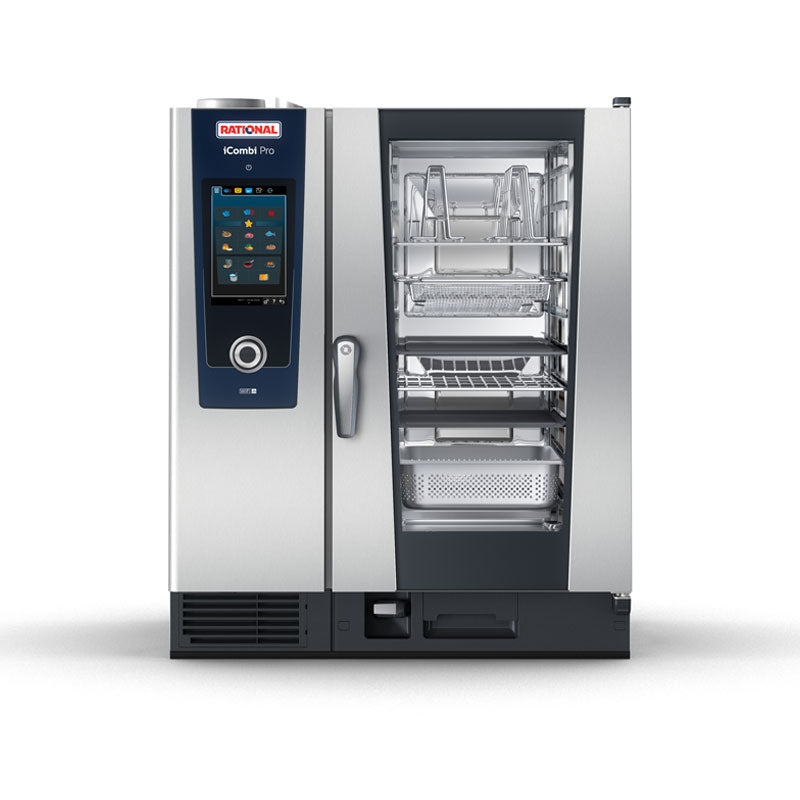
The practical upside goes beyond technique. Because you can dial in humidity, a combi oven often improves yield and reduces shrinkage on proteins compared with dry roasting, which matters directly to your food cost margins. Many operators also use a combi to replace two or three separate appliances, a table-top steamer among them, freeing up line space that a tight kitchen genuinely needs.
Programmable controls on modern combi units store recipes and automate humidity and temperature changes, which cuts down on operator-to-operator inconsistency once the programmes are set correctly.
None of that comes free. Combi ovens need a dedicated water line, a drain, and often a water treatment system to manage scale build-up, which adds real installation cost on top of the unit price. Descaling has to happen on a schedule, not when someone remembers, or performance and hygiene both suffer.
Pro Tip: Ask your supplier for the manufacturer’s recommended descaling interval before you buy, then check it against your local water hardness. Hard water areas can cut that interval in half, which changes your real maintenance budget.
The downsides worth weighing before you commit:
- Higher upfront capital cost than an equivalent convection unit.
- Training takes longer because staff need to understand which mode suits which dish.
- Maintenance is more involved, with water treatment and descaling as recurring tasks rather than occasional fixes.
Combi vs convection oven: comparing the trade-offs that matter
| Factor | Convection Oven | Combi Oven |
|---|---|---|
| Performance and consistency | Fast, even dry heat; excellent for baking and roasting | Adds humidity control for moister results and better yield |
| Versatility / cooking modes | Single mode: convection only | Three modes: steam, convection, and combined |
| Purchase and running cost | Lower capital cost, simpler operation | Higher capital cost, more capable per unit |
| Installation and utilities | Power connection only, minimal groundwork | Needs water supply, drain, and often water treatment |
| Maintenance and cleaning | Routine cleaning, occasional fan or element repair | Regular descaling, water system upkeep, more involved cleaning |
| Staff training and usability | Quick to learn, low variance between operators | Longer training curve, though programmable recipes help |
| Energy efficiency and yield | Efficient for dry-heat batches, but higher shrinkage on proteins | Humidity control cuts shrinkage and can improve overall yield |
Put this into real menu terms. A roast joint benefits from a combi’s humidity setting, holding onto more moisture and losing less weight during cooking than the same joint in a convection oven. Delicate fish fares far better under gentle steam than dry fan heat, which tends to overcook the surface before the centre is done. Bakery items like laminated pastry or artisan loaves often need that steam injection for proper structure and crust, something a convection oven simply cannot replicate.
Rethermed banquet plates are where the case for a combi is strongest. Convection reheating dries food out fast, while a combi’s steam mode brings plated meals back to service temperature without the food looking like it’s been sitting under a heat lamp.
How to choose: a checklist for commercial kitchen buyers
Run through these five tests before you commit to either type:
- Menu-first test: work out what percentage of your dishes genuinely need humidity control or multiple cooking modes. If it’s under 20%, a convection oven may be all you need; above that, a combi starts making financial sense.
- Volume test: calculate your hourly or per-shift throughput and work out how many trays and doors that actually requires. Undersizing either oven type is a common and expensive mistake.
- Utility test: confirm your kitchen has the power, and where relevant the water and drain access, that a combi demands. Retrofitting plumbing into an existing kitchen can cost more than the oven itself.
- Cost test: look beyond the sticker price to total cost of ownership, energy use, water treatment, and maintenance, then check what financing or grants might offset that.
- Staff test: be honest about how much training time you can spare. A combi’s programmable recipes reduce variance, but only once your team has actually learned to use them properly.
Pro Tip: If you’re unsure whether your menu justifies a combi, track how often your kitchen currently uses a steamer, a proofer, and an oven for the same dish across a week. If those three appliances are constantly in play together, a combi is probably already paying for itself in wasted counter space.
Where to see these ovens and check the numbers
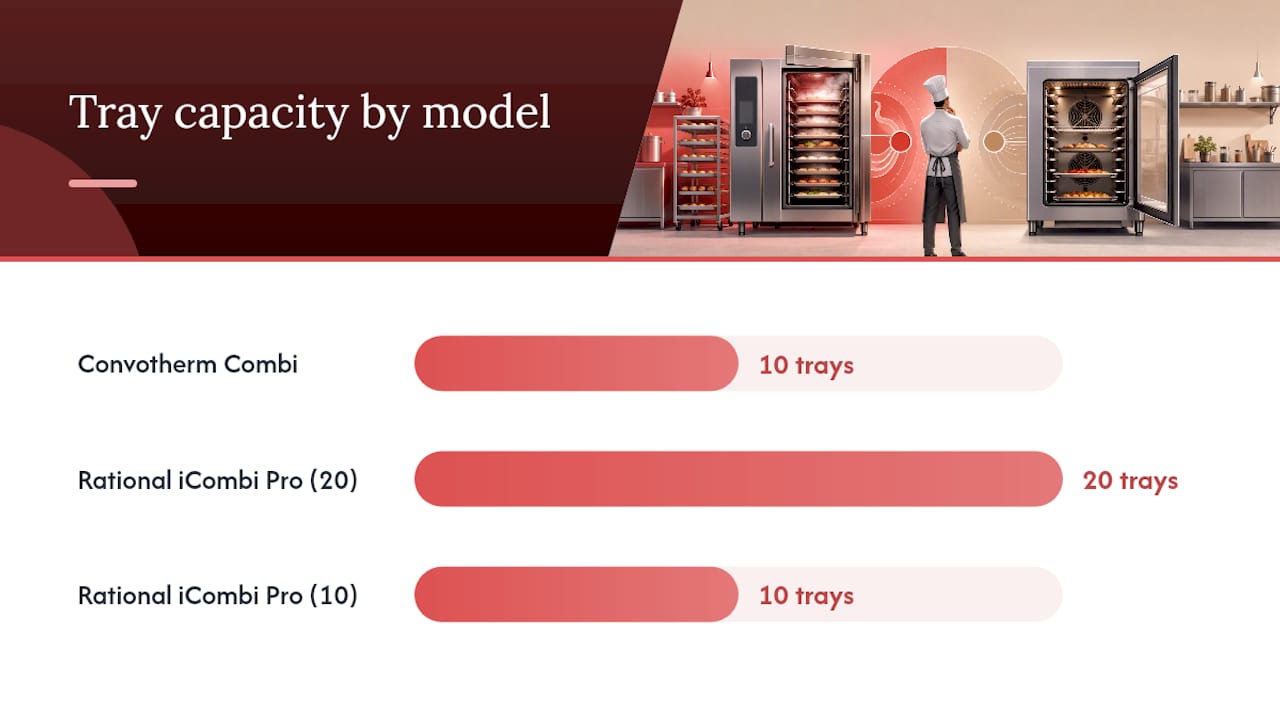
Superiorkitchenequipment stocks both ends of this comparison, so you can compare a convection unit against a combi oven side by side rather than deciding from a spec sheet alone. The current combi range includes the Convotherm Combi Oven 10 Trays, the Rational iCombi Pro 20 Tray Combi Oven, and the Rational iCombi Pro 10 Tray Combi Oven, covering both smaller kitchens and higher-volume operations.
Superiorkitchenequipment also advises on the energy-efficiency grants and savings available on qualifying equipment, which can materially change the total cost comparison between a convection and a combi purchase. The practical next step is straightforward:
- Visit the showroom to see tray capacity and controls in person.
- Request a site survey to confirm your power, water, and drainage are ready for a combi.
- Ask for a written quotation that accounts for any applicable energy grants before you compare final costs.
When to start with convection and when to commit to a combi
Kitchens with a focused, dry-heat menu are usually better served starting with a convection oven and upgrading once volume or menu complexity justifies the jump. I’ve seen operators buy a combi too early and use it as an expensive convection oven for a year before the menu caught up. Train staff gradually, and let actual usage decide the next investment.
Get a combi or convection oven fitted to your kitchen
Choosing between a combi and a convection oven is only half the job. The other half is knowing your power and water lines can actually support what you buy, which is why Superiorkitchenequipment handles the site survey alongside the sale rather than leaving installation as an afterthought.
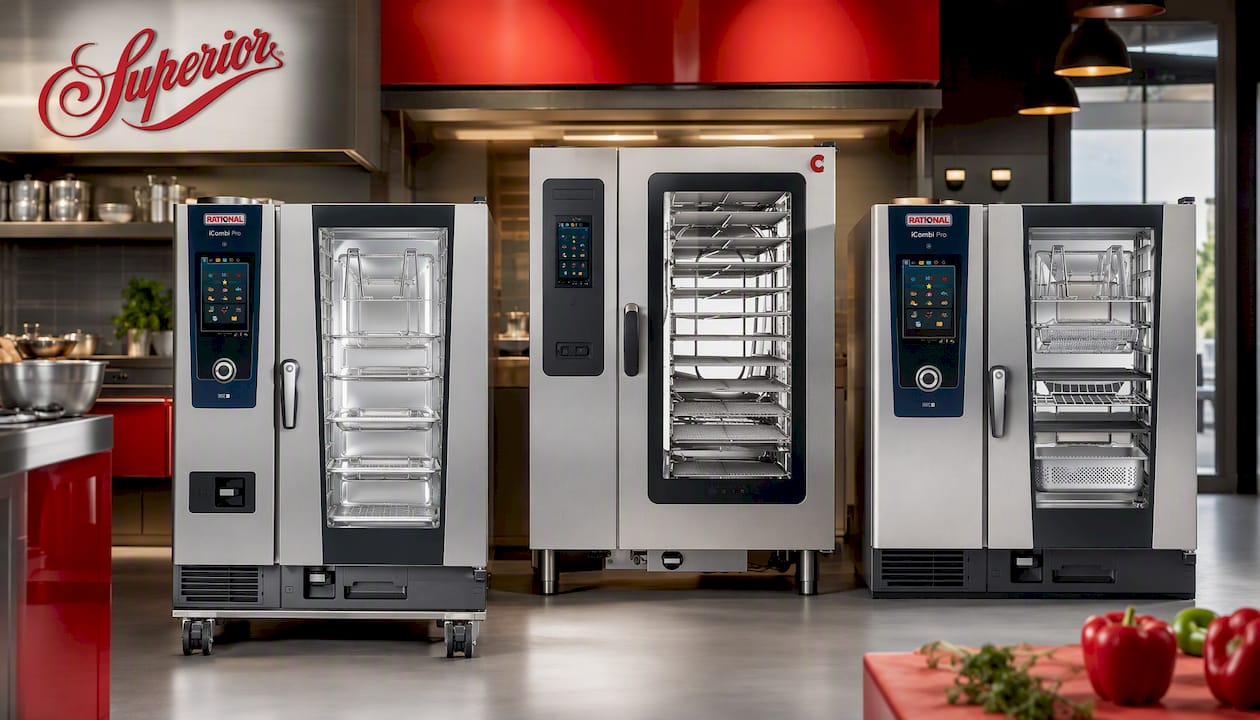
Whichever way the checklist points you, the range covers it: the Convotherm Combi Oven 10 Trays suits kitchens moving into multi-mode cooking for the first time, while the Rational iCombi Pro 20 Tray Combi Oven and Rational iCombi Pro 10 Tray Combi Oven scale to your throughput. Superiorkitchenequipment also guides buyers through energy-efficiency grants that apply to qualifying kitchen equipment, which can shift the maths considerably before you sign off on a budget. Visit the showroom or request a site survey to get a quotation matched to your actual utilities and menu, not a generic spec sheet.
Sources
- Commercial ovens explained: convection, combi & deck choices • Chef’s Icon
- Combi ovens vs convection ovens: which is best for restaurants? – GA Commercial