

A chamber vacuum sealer is the better choice for a food business that seals liquids, marinades, soups or sauces, or that packs in volume every day. An external vacuum sealer is the smaller, lower-cost option for dry or solid items packed in low volumes. This guide explains how each machine removes air, which bags and foods each handles, what to check on capacity and maintenance, and how the choice fits a Singapore kitchen.
TL;DR
- External sealers pull air out of the bag from its open end. Chamber sealers remove air from the whole chamber, so the pressure inside and outside the bag stays equal.
- Chamber machines handle liquids and wet foods. External machines are best kept for dry or firm items.
- Chamber machines use smooth pouches. External machines need embossed (channelled) bags. The two are generally not interchangeable.
- For daily batch packing in a restaurant, caterer or food manufacturer, a chamber model usually fits the workflow better. For occasional sealing, an external model is enough.
- Check the equipment’s eligibility before assuming a grant applies. Vacuum sealers are not named in the Energy Efficiency Grant equipment list we reviewed.
Table of Contents
- How each type removes air
- Side-by-side comparison
- Foods and packaging each machine can handle
- Workflow: speed, batch size and daily volume
- What to check before you buy
- Energy use and running cost in Singapore
- Our perspective
- See the equipment in Singapore
- Which one should you choose?
- FAQ
- Sources
How each type removes air
External (suction) sealers
An external sealer has a sealing bar on the outside of the machine. You place the open end of the bag in a small channel, close the lid, and a pump draws air out of the bag through that opening. When the pump finishes, a heating bar seals the bag.
The pump acts only on the inside of the bag. Anything loose inside, such as liquid, can travel towards the opening with the air. This is the main reason external machines are matched to dry or firm foods.
Chamber sealers
A chamber sealer works differently. You place the whole bag inside the chamber, with the open end resting over the sealing bar, and close the lid. The machine removes air from the entire chamber. Pressure inside the bag and in the chamber falls together, so nothing is pulled out of the bag. The bar then seals the pouch while the chamber is still under vacuum, and air is let back in.

Because the process equalises pressure, soups, stews and marinades can stay in the pouch during sealing. The vacuum level can also be controlled, which matters for delicate items.
How much air is left in the bag
One supplier guide states that external sealers typically leave 10 to 20% residual oxygen, while properly configured chamber machines can remove up to 99.5% of oxygen. Treat these as typical figures. Results depend on the model, the bag and the setting used.
Side-by-side comparison
| Criterion | External sealer | Chamber sealer |
|---|---|---|
| Where air is removed | From inside the bag, through its open end | From the whole chamber |
| Liquids and wet foods | Not suited | Suited |
| Bag type | Embossed or channelled bags | Smooth pouches |
| Bag cost | Usually higher per bag | Usually lower per pouch |
| Footprint | Compact, can be stored away | Larger, needs a fixed bench space |
| Machine price | Lower | Higher |
| Best for | Occasional sealing, dry items | Daily and batch packing, liquids |
The bag cost row reflects how the products are made. Embossed bags carry a textured surface that creates air paths for the pump, while smooth pouches do not need it. Supplier pricing varies, so compare current quotes for the bag size you use.
Foods and packaging each machine can handle
Bags and pouches
Smooth pouches are designed for chamber machines. Embossed pouches are designed for external-suction machines. Singapore pouch suppliers explain that the two types are generally not interchangeable. Before you buy a machine, decide which bag you will stock, since a pouch order is a recurring cost for the life of the machine.
Dry and solid foods
Both machine types can seal dry goods, cuts of meat, cooked proteins and vegetables. For a kitchen sealing dry ingredients in small numbers, an external machine can do the job.
Liquids, sauces and marinated items
This is where the two diverge. A chamber machine can seal soups, curries, sauces and marinades, because the pressure change does not draw the liquid out. Kitchens that portion rendang, braised sauces, stocks or marinated meats before chilling often choose a chamber machine for this reason.

Moist items on an external machine
If you do use an external machine for a moist item, a common practice is to chill or partly freeze it first, and to keep the bag opening clean and dry so the seal holds. Any residue on the sealing area can prevent a proper seal.
Workflow: speed, batch size and daily volume
Restaurants and central kitchens
A restaurant that prepares sauces, proteins and sous vide portions ahead of service will usually seal many bags in one session. A chamber machine lets staff load several pouches, or larger items, into the chamber and run one cycle. A double chamber design, which has two chambers and sealing bars, allows one side to be loaded while the other runs, so the operator keeps working without waiting.
Caterers
Caterers pack portions for transport and event days. Consistent sealing on liquids and gravies reduces leaks in transit. Chamber machines also take larger pouches, depending on the chamber dimensions, so check the internal size against your biggest item.
Food manufacturers
Manufacturers pack at a larger scale, and shelf life matters to the product. As an example from Singapore, ThongSiek introduced vacuum-packed fish balls that gave the product a four-week shelf life. Shelf life depends on the product, hygiene, and storage temperature, so test your own product and follow the food safety conditions that apply to your licence.
Small food businesses and start-ups
A home-based or early-stage business that seals a few bags per day, mostly dry or firm items, can start with an external machine. When volume or liquid products grow, a chamber machine becomes the more practical tool.
What to check before you buy
Use this list when comparing models, whichever type you choose.
- Chamber or bar length. Measure your largest bag or tray. For external machines, the sealing bar length sets the maximum bag width. For chamber machines, the internal chamber dimensions set the limit.
- Cycle time. Ask for the time per cycle at your normal vacuum level, and how many bags fit in a cycle.
- Pump type and duty cycle. Check how many consecutive cycles the pump is designed to run before it needs rest. A daily-volume kitchen needs a pump rated for it.
- Power and supply. Confirm the electrical rating and that your kitchen outlet or circuit can support it, along with other equipment on the same circuit.
- Bag compatibility. Confirm the bag type, thickness and size you will buy, and where you will buy them.
- Sealing quality. Check seal width, whether the machine has double seals, and whether the sealing time can be adjusted for thicker bags.
- Cleaning. Chamber machines have a smooth chamber that can be wiped down. External machines have a drip tray or channel that needs cleaning after liquid is drawn in. Stainless steel bodies are easier to keep hygienic in a commercial kitchen.
- Maintenance. Pump oil (on oil pumps) needs to be checked and changed as the manufacturer instructs. Sealing bar tape and gaskets are wear parts. Ask what is stocked locally.
- Bench space and weight. A chamber machine is heavy and sits on a sturdy, level bench.
- Warranty and service. Confirm warranty terms and who services the machine in Singapore.
Energy use and running cost in Singapore
Electricity cost is a smaller part of the decision than bag cost and labour, but it is worth comparing. One industry article states that chamber machines are generally more energy-efficient per seal, because the process is faster and more effective. Actual consumption depends on the model, so compare the rated power and the cycle time together, and estimate energy per seal rather than looking at wattage alone.
In practice, the larger saving usually comes from fewer failed seals and less wasted product, since liquids and wet items are sealed in one pass.
Grants and eligibility
Enterprise Singapore’s Energy Efficiency Grant (EEG) provides local SMEs in Food Services, Food Manufacturing and Retail with up to 70% support, capped at S$30,000 per company per year, for energy-efficient equipment in pre-scoped categories. The categories listed in that document are LED lighting, air conditioners, refrigerators, cooking hobs, water heaters and clothes dryers. Vacuum sealers do not appear in that list.
This means a vacuum sealer should not be assumed to qualify. Refrigeration and induction cooking equipment in the same kitchen may. Guidance published by a grant advisor also notes that applications should be made before paying or signing, and that the same expense cannot be claimed under more than one grant. Scheme terms change, so confirm the current rules with Enterprise Singapore before you commit to a purchase.
For how the scheme applies to kitchen equipment, see our guides on EEG-ready procurement for kitchen equipment and the EDGE grant and kitchen equipment.
Our perspective
We supply commercial kitchen equipment to restaurants, caterers, food manufacturers and new food businesses in Singapore. The question we hear most about vacuum sealing is whether an external machine is enough.
Our answer depends on what is being sealed. If the kitchen packs dry or firm items occasionally, an external machine is a reasonable start. If the kitchen portions sauces, soups or marinated items, or seals every day in batches, we recommend a chamber machine, because it is designed to seal liquids without drawing them out of the bag.
For that reason we list a double chamber vacuum sealer for kitchens that need continuous throughput, and a large vacuum sealer machine for kitchens that need a bigger format. We also advise buyers to look at the whole kitchen: chillers, freezers and induction cookers are where energy-efficiency grants are most often relevant, and sealing fits into that plan.
Our energy-efficiency guidance and our kitchen equipment ROI guide are written for operators who want to plan purchases in the right order.
David
See the equipment in Singapore
Superior Kitchen Equipment sells commercial kitchen appliances for the food service industry through its online store and its physical showroom. You can view vacuum sealers alongside refrigeration, induction cookers, fryers, ovens and stainless steel furniture, and discuss which suits your volume and layout.
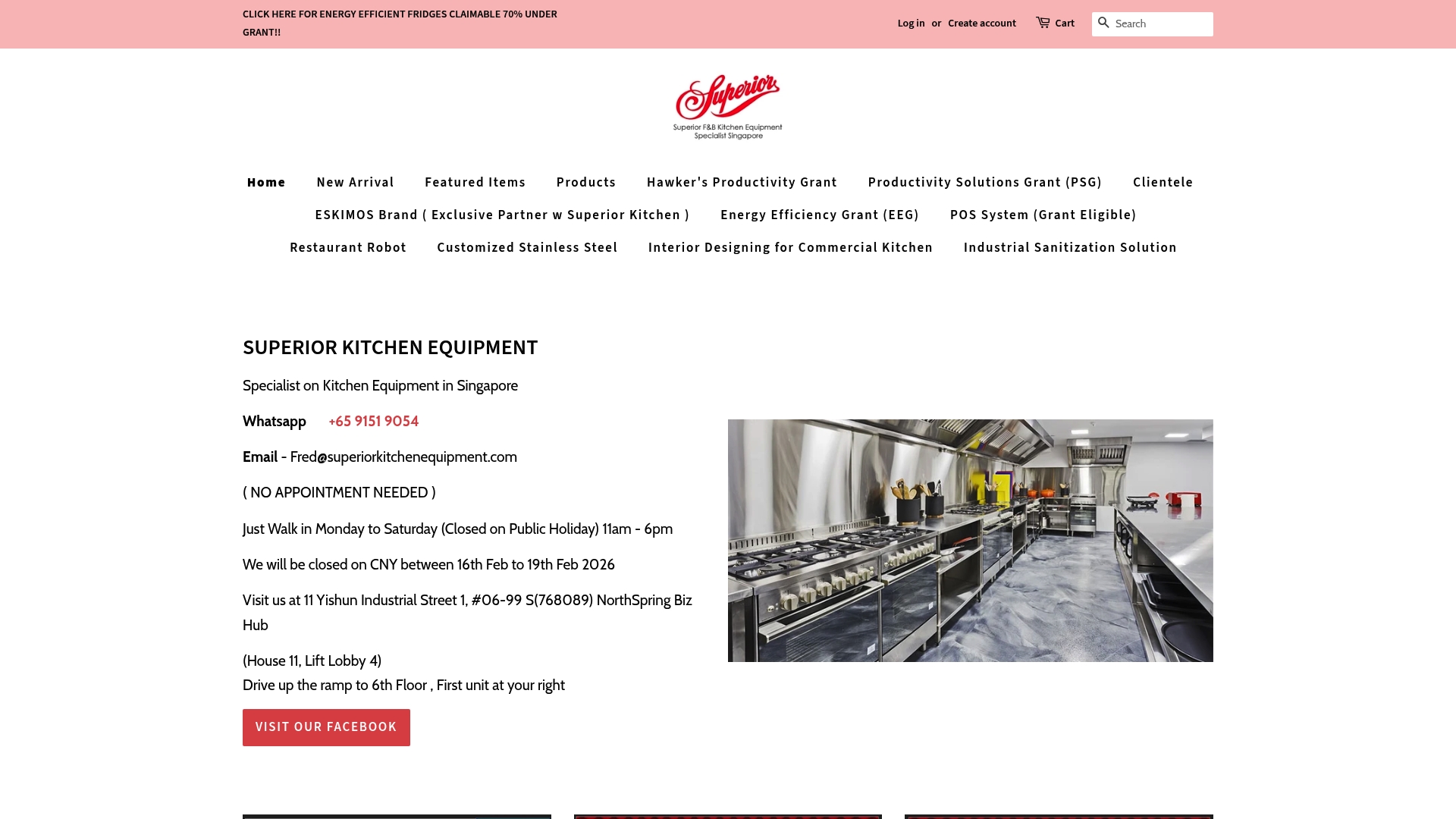
Browse the full equipment collection or the commercial kitchen equipment range to plan the whole kitchen in one order.
Which one should you choose?
Use these rules as a starting point.
- Choose a chamber sealer if you seal liquids or wet foods, pack more than a few bags per day, want to use smooth pouches, or need consistent results for retail or catering portions.
- Choose an external sealer if you seal dry or firm items, pack in small numbers, and have limited bench space.
- Choose a double chamber model if several staff seal during the same shift and waiting for each cycle slows the line.
Whatever you pick, buy the matching bags at the same time, set up a cleaning routine for the sealing bar and chamber, and keep the machine on a dedicated bench near your chillers so sealed product goes straight into cold storage.
FAQ
Can an external vacuum sealer seal soup?
It is not designed for it. The pump acts on the inside of the bag, so liquid can be drawn towards the opening and prevent a good seal. For soups, sauces and marinades, a chamber sealer is the suitable machine. Freezing the liquid first is a workaround, but it adds a step to every batch.
Can I use embossed bags in a chamber sealer?
Singapore suppliers state that smooth pouches are designed for chamber machines and embossed pouches for external machines, and that the two are generally not interchangeable. Check the machine manual for the bag type it supports before you order stock.
Is a chamber vacuum sealer worth the higher price?
For kitchens that seal liquids or pack daily in volume, it usually is, because it handles wet items and larger batches in one cycle. One industry article puts chamber machines at US$2,000 to US$8,000, so compare against your daily volume and local quotes. For occasional dry sealing, an external machine costs less.
Does a vacuum sealer qualify for the Energy Efficiency Grant?
The EEG equipment categories we reviewed are LED lighting, air conditioners, refrigerators, cooking hobs, water heaters and clothes dryers, and vacuum sealers are not listed. Confirm the current list and your eligibility with Enterprise Singapore before purchase.
Sources
- Smooth vs Embossed Vacuum Pouches Singapore
- Should I Use Flat or Embossed Vacuum Seal Bags?
- Energy Efficiency Grant (EEG) FAQ, Enterprise Singapore
- Green Transition & ESG Grants Singapore 2026
- Chamber Vacuum Sealers: When They’re Worth the Counter Space
- ThongSiek: how a family fishball business was built