

For crisp edges and predictable browning, use metal. For flexible release and moulded desserts, use silicone. Metal (aluminium or aluminised steel) suits cookies, roasting and anything needing a defined crust; silicone suits muffins, madeleines and freezer-to-oven bakes where a paler finish is fine. When you switch between the two, adjust your time or temperature slightly and always back a silicone mould with a solid sheet pan.
TL;DR:
- Metal bakeware provides faster heat transfer and stronger browning, making it ideal for cookies, bread, and crust-focused baked goods.
- Silicone bakeware heats slowly and insulates, resulting in more even, pale bakes, and is best suited for shaped desserts, muffins, and frozen treats.
- Durability favors heavy-gauge aluminum or clad stainless steel pans, which resist warping and offer consistent results over years of use.
- Proper support and oven fit are crucial for optimal baking performance, requiring stable racks, stands, and preheated oven temperatures.
- Switching between materials requires adjusting bake times and understanding each material’s heat conduction and browning tendencies.
Table of Contents
- Silicone vs metal bakeware: how each material actually performs
- Metal bakeware: aluminium, aluminised steel and stainless steel compared
- Silicone vs metal bakeware: comparing heat, browning, release and cost
- Choosing bakeware for what you actually bake
- Getting the best results from either material
- Why oven fit and pan stability matter as much as material
- A baker’s note on switching materials
- Stainless steel solutions worth considering from Superior Kitchen Equipment
- Sources
Silicone vs metal bakeware: how each material actually performs
Silicone is an insulator, not a conductor. Heat moves through it slowly, which is why bakes made in silicone tend to come out evenly cooked but noticeably pale, and often need a few extra minutes in the oven compared with the same recipe in a metal tin. That’s a direct trade against aluminium, which releases and absorbs heat quickly enough to change browning outcomes on its own.
Where silicone earns its place is in anything with an intricate shape. Muffin cups, madeleine shells and ornate dessert moulds pop out cleanly because the material flexes, so there’s no wrestling a stuck cake out of a tin with a palette knife.
A few practical limits worth knowing before you buy:
- Most food-grade silicone is rated to typical oven temperatures around 220°C (428°F), though this varies by manufacturer, so always check the base of the mould for the exact limit.
- Never put silicone under a broiler or near open flame. Direct radiant heat exceeds what the material is designed for, unlike a standard oven bake.
- Silicone absorbs oils and odours over time, so a mould used for garlic bread can carry a faint whiff into your next batch of cupcakes.
- Cleaning tricky residue usually means a bicarbonate-of-soda paste, a short boil in water, or a normal cycle in the dishwasher, since most silicone bakeware is dishwasher-safe.
Metal bakeware: aluminium, aluminised steel and stainless steel compared
Aluminium and aluminised steel are the workhorses of any serious kitchen for one reason: they heat up and cool down fast. That responsiveness is exactly why professional bakers gravitate toward heavy-gauge aluminium sheet pans for cookies, roasting and anything where a defined, browned crust matters.
Stainless steel behaves differently. It’s non-reactive and tough, but on its own it conducts heat more slowly than aluminium, which is why many stainless pans use a clad or tri-ply construction with an aluminium core to get faster, more even heat distribution. Plain stainless without that core tends to bake unevenly.
A few things separate a pan that lasts from one that warps within a year:
- Rolled edges add rigidity, so the pan resists the bowing and buckling that thin, flat-edged trays develop after repeated heating.
- Heavier gauge metal holds its shape better under thermal stress, which matters most for large sheet pans exposed to big temperature swings.
- Dark, thin pans absorb heat unevenly and often overbrown the base of delicate bakes before the centre sets.
- Nonstick coatings degrade with scratching and repeated use, so parchment paper or a silicone baking mat is a more durable non-stick solution than relying on the coating itself.
Silicone vs metal bakeware: comparing heat, browning, release and cost
Put the two materials side by side on the factors that actually change your results, and the pattern holds across almost every category.
| Factor | Metal (aluminium/aluminised steel) | Silicone |
|---|---|---|
| Heat conduction and evenness | Fast, responsive; shortens bake time | Slow, insulating; often needs longer bake times |
| Browning/crust development | Strong Maillard reaction, defined crust | Minimal browning, paler surface |
| Ease of release | Good with parchment or light greasing | Excellent, flexes free without greasing |
| Durability and warping | Warps if thin or shocked with sudden heat | Doesn’t warp, but can deform under weight when hot |
| Cleaning and maintenance | Hand wash advised for coated finishes; scratches show | Dishwasher-safe; can retain odours and oils |
| Cost and lifetime value | Higher upfront for heavy gauge, lasts years | Lower upfront, can degrade or discolour over time |
| Best for | Cookies, roasting, breads, crisp edges | Muffins, moulded desserts, frozen-set treats |
The Maillard reaction, the browning that gives cookies their crisp lace and bread its crust, needs direct, efficient heat transfer. Metal delivers that. Silicone’s insulating structure works against it, which is one reason it rarely gives home bakers the crisp edge they expect from cookies, even when the recipe and oven temperature are identical.
Durability tells its own story over time. A decent aluminium sheet pan can last a decade if you avoid thermal shock; a cheap silicone mould can discolour or stiffen after extended regular use, though it never warps the way thin metal does.
Choosing bakeware for what you actually bake
Match the material to the finish you want, not the material you already own.
- Cookies and sheet bakes: choose metal every time. The fast heat transfer gives you the spread and browning that define a good cookie.
- Breads needing a real crust: metal again, ideally a heavier-gauge loaf tin or sheet pan that won’t buckle under a hot dough.
- Muffins, shaped desserts and frozen-set treats: silicone’s flexibility makes release painless, and the paler crust barely matters on a muffin top or a chilled dessert.
- Beginners with limited storage or grip strength: lean silicone. It’s light, stacks flat, and never needs greasing.
- Bakers chasing texture and crust control: invest in metal and learn to work with its quicker heat.
For a starter kit, one solid aluminium sheet pan, one metal loaf tin, and a single silicone mould for muffins or a bundt-style dessert covers most home baking needs without cluttering a cupboard.
Getting the best results from either material
Small habits protect both your bakes and your bakeware.
- Always place a silicone mould on a rigid sheet pan before it goes in the oven, since wet or heavy batter needs solid support to move safely without spilling.
- Preheat your oven fully before metal pans go in. A cold start followed by a blast of heat is what causes warping over time.
- Clear stubborn odours or greasy residue from silicone with a baking-soda paste, or a short boil in water for anything particularly stubborn.
- Use wooden or plastic utensils on silicone; metal utensils can nick the surface. On uncoated metal pans, skip abrasive scourers, which dull the finish and encourage sticking.
Pro Tip: If a cookie recipe was written for a metal sheet pan, expect to add extra minutes when baking the same batch on silicone, and don’t judge doneness by colour alone since silicone bakes stay pale even when fully cooked.
Why oven fit and pan stability matter as much as material
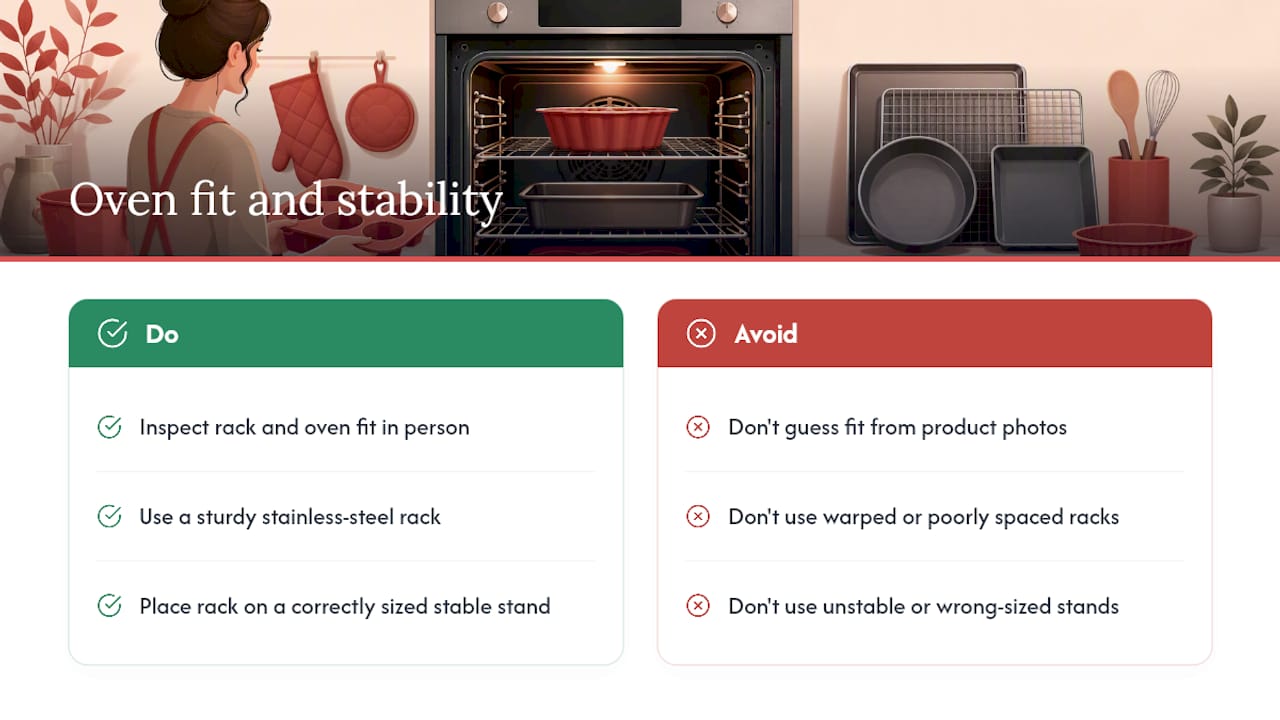
Material choice only gets you halfway. A warped rack or an unstable oven stand undoes the benefits of even the best aluminium sheet pan, because uneven contact with the rack creates hot spots regardless of what the pan is made from. Checking rack and oven fit in person, rather than guessing from a product photo, is one reason a showroom visit is worth the trip before buying new kit.
A sturdy stainless steel rack with proper spacing improves airflow around metal pans, which supports the fast, even heat transfer that makes aluminium worth choosing in the first place. Sitting that rack on a stable, correctly sized oven stand reduces handling risk when you’re pulling a full sheet pan of hot bakes.
A baker’s note on switching materials
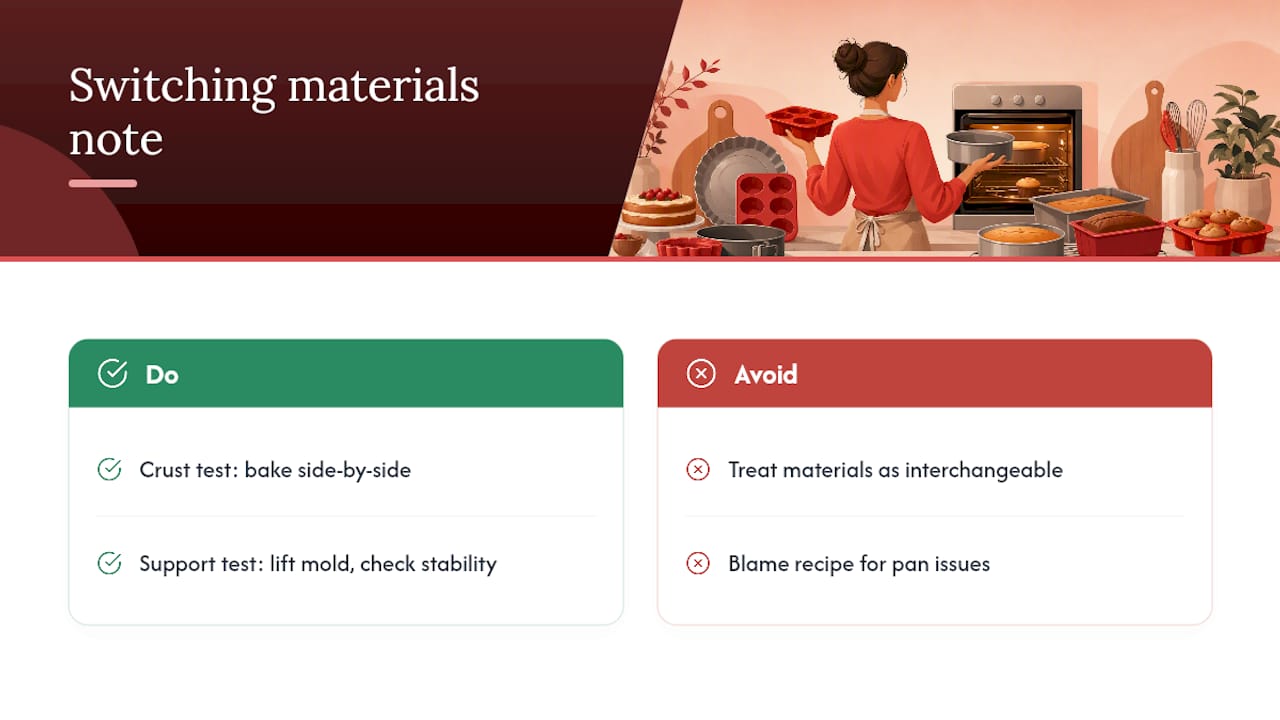
The most common mistake is treating silicone and metal as interchangeable, then blaming the recipe when a cookie spreads thin and pale instead of crisp. It’s the pan, not the dough.
Before buying, run two simple checks: the crust test (bake the same recipe in both materials once, side by side) and the support test (lift a filled silicone mould and see whether it needs a tray underneath). Both tell you more than any spec sheet.
— David
Stainless steel solutions worth considering from Superior Kitchen Equipment
If stability and airflow are what’s letting your metal bakeware down, the fix usually isn’t a new sheet pan. Some kitchen equipment retailers stock supporting kit important for rack spacing, stand height, and oven clearance, details that product photos can’t show you.
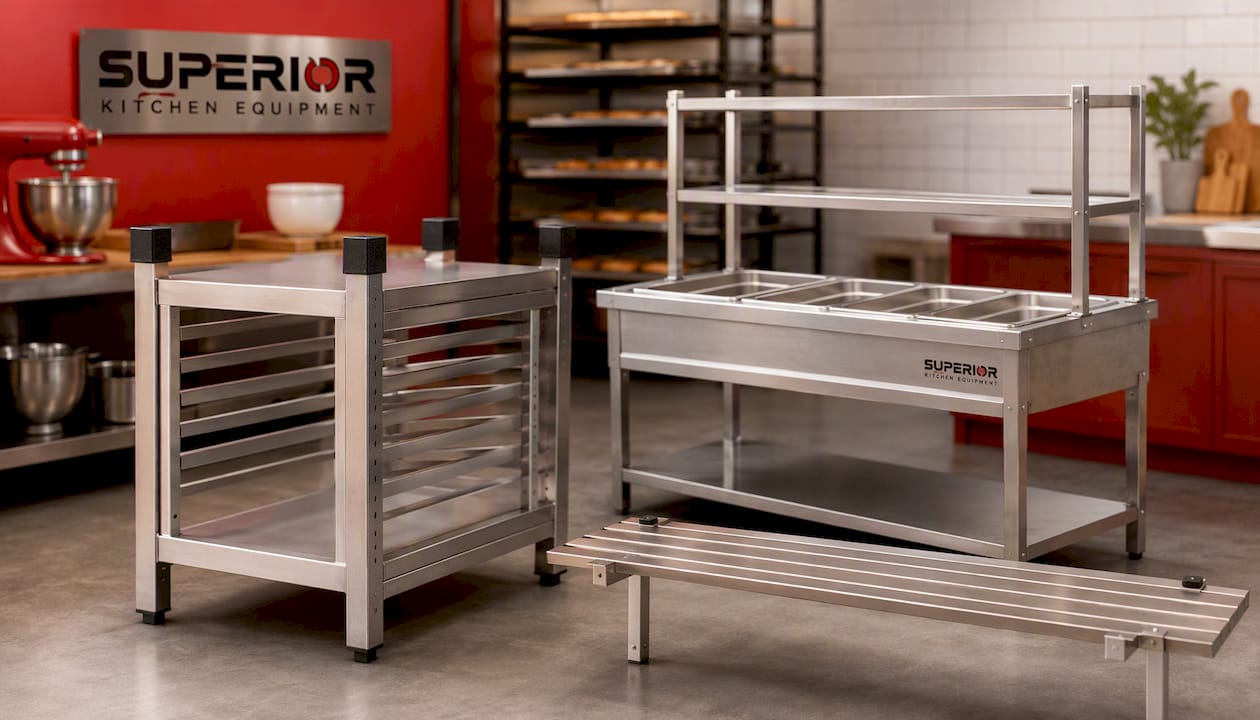
The Stainless Steel Rack w Holes improves airflow around metal sheet pans, which supports the fast, even browning that makes aluminium worth using in the first place. Pair it with the Customized Stainless Steel Oven Stand for a stable base that stops trays wobbling when you’re pulling a full batch of hot bakes. For gentler work, custards, warm sauces, anything that needs even, controlled heat rather than a blast, the Customized Stainless Steel Bain Marie is built for that job specifically, without the guesswork of adapting a domestic pan.
Visit a showroom to check fit and stability against your own oven before you commit, or review product pages directly to get a quote for your setup.
Sources
- The no. 1 best baking sheet out of 16 I’ve tested (Bon Appétit)
- Are silicone pans better for baking? (Real Simple)
- Best materials for baking (NYMag / The Strategist)