

For low-charge commercial refrigeration, R290 is generally the stronger choice on energy efficiency and environmental impact, but it comes with flammability and regulatory constraints that R134a doesn’t carry. The trade-off breaks down into three lines: R290 delivers better thermodynamic performance and needs a smaller refrigerant charge; R134a avoids flammability classification but carries a Global Warming Potential roughly 400 times higher; and retrofitting from one to the other is rarely as simple as an installer might suggest.
- Performance: R290 typically needs only 43 to 46% of the refrigerant mass R134a requires for equivalent cooling, according to experimental testing published on ScienceDirect.
- Environment: Norlake’s technical notes put R290’s GWP at around 3, against R134a’s roughly 1,300.
- Regulation: Singapore’s NEA phase-down rules and SCDF fire-safety guidance both shape what you can install and where.
For buyers weighing new equipment rather than mid-life conversions, Superiorkitchenequipment stocks R290-compatible commercial chillers that sidestep most of the retrofit debate entirely.
Key Takeaways
R290 outperforms R134a on efficiency and GWP in most commercial kitchen conditions, but flammability rules and retrofit complexity mean the right choice depends on application, ambient range, and service capability.
| Point | Details |
|---|---|
| Efficiency edge is conditional | R290 matches or beats R134a’s COP above roughly 15 to 20°C ambient; R134a can hold parity below that. |
| Charge size drops sharply | R290 typically needs only 43 to 46% of the refrigerant mass R134a requires for equivalent cooling. |
| GWP gap drives regulation | R290’s GWP of around 3 against R134a’s roughly 1,300 is pushing NEA’s phase-down timelines. |
| Retrofit isn’t a simple swap | Hydrocarbon-rated compressors, ventilation, and leak detection are required before converting an existing R134a system. |
| Procurement route matters | Superiorkitchenequipment supplies R290-compatible chillers and counter units suited to low-charge commercial applications. |
Table of Contents
- R290 vs R134a: comparing thermodynamic performance and COP
- How much does GWP actually change the cost picture?
- Is R290 actually safe to install in a commercial kitchen?
- Can you retrofit R290 into an existing R134a system?
- Which refrigerant should you choose, and when?
- How does Superiorkitchenequipment support the low-GWP transition?
- What the data actually tells decision-makers
- Ready to specify low-GWP refrigeration for your kitchen?
- Sources
R290 vs R134a: comparing thermodynamic performance and COP
The efficiency case for R290 isn’t theoretical. Peer-reviewed testing on a cold storage air conditioning system found R290 produced a specific refrigerating effect around 52% higher than R134a in the same rig, with coefficient of performance (COP) matching or exceeding R134a once ambient temperatures climbed into moderate to high ranges, per the ScienceDirect study.
That word “ambient” matters more than most spec sheets let on. A comparative study published in JEPT found R290 outperforms R134a above roughly 15 to 20°C, but at cooler ambient conditions near 10°C, R134a can match or edge ahead. If you’re specifying a heat pump water heater for a site with genuinely cold winters, that reversal is worth building into the spec, not discovering after commissioning.
Statistic callout: In the ScienceDirect test rig, optimal R290 charge sat between 500 and 600 grams, against 1,300 to 1,400 grams for R134a in the identical system, a reduction of roughly 43 to 46%.
The smaller charge isn’t just a cost saving on refrigerant. R290 systems also run with lower compressor discharge temperatures and lower pressure ratios than comparable R134a setups at the same evaporation temperature, according to ResearchGate’s mirror of the same experimental study. Engineers reviewing that data note it can translate into:
- Reduced thermal stress on compressor components
- Longer intervals between major service work
- Lower parasitic energy loss across the compression cycle
None of this means R290 wins everywhere. It means R290’s efficiency case strengthens as ambient temperature rises, which is precisely the profile of most commercial kitchens running display chillers and prep-line refrigeration in Singapore’s climate.
How much does GWP actually change the cost picture?
R290’s Global Warming Potential of roughly 3 against R134a’s approximately 1,300 isn’t a rounding difference. It’s the gap between a refrigerant regulators are actively encouraging and one they’re actively phasing down, and that distinction now shows up directly in procurement economics.
Singapore’s National Environment Agency has set staged GWP limits for categories of refrigeration and air conditioning equipment, alongside registration and competency requirements for anyone handling regulated refrigerants. That timeline changes how you should think about total cost of ownership, not just sticker price:
- Equipment specified today on R134a may face tightening restrictions before its service life ends.
- Spare parts and refrigerant top-ups for high-GWP systems could become harder to source as suppliers shift stock towards compliant alternatives.
- Buildings and fleets standardising on low-GWP refrigerants now avoid a second capital cycle later.
Manufacturer notes from Norlake frame R290’s low GWP alongside genuine energy-saving performance, which is the rare case where the environmentally preferable option and the operationally cheaper one point the same direction. That alignment is why R290 adoption in commercial refrigeration has moved from niche to mainstream faster than most other refrigerant transitions.
Is R290 actually safe to install in a commercial kitchen?
R290 is propane, classified as an A3 refrigerant, meaning it’s both highly flammable and carries low toxicity. That’s the trade you’re accepting for the efficiency and GWP gains: safety now hinges on charge mass and mitigation design rather than on the refrigerant’s chemistry alone.

Singapore’s SCDF fire-safety appendix sets out the policy basis for restricting and regulating hydrocarbon refrigerants, with charge limits and installation controls designed around exactly this risk. Smaller total refrigerant mass reduces total fuel load, which is why low-charge, self-contained units dominate current R290 deployment, as Copeland’s application notes describe.
A practical compliance checklist before you commit to R290:
- Confirm the equipment is a certified, factory-sealed hermetic system rather than a field-charged retrofit.
- Verify ventilation and gas-detection provisions meet the mitigation standard for the installed location.
- Check NEA registration and competency requirements apply to the installer or servicing technician.
- Document charge mass against the manufacturer’s rated limit for that model and room size.
- Confirm multi-agency sign-off where SCDF review applies to your building class.
Pro Tip: Specify the intended charge limit and leak-detection threshold at tender stage, not after delivery. Suppliers price compliance measures properly when they know the requirement upfront, rather than treating detection and ventilation as costly change orders later.
Can you retrofit R290 into an existing R134a system?
No, not as a straightforward swap. R290 is not a drop-in replacement for R134a. Compressor oils, seals, expansion devices, and safety components are all specified around the refrigerant they were designed for, and simply changing the gas without changing the hardware risks both poor performance and a genuine safety hazard.
A proper retrofit typically requires:
- A compressor rated for hydrocarbon service, not just compatible lubricant
- Leak detection and ventilation upgrades sized to the new charge and space
- Verified electrical components rated for a flammable-refrigerant environment
- Recommissioning and performance testing against the manufacturer’s charge specification
Overcharging is a real and measurable risk here. Testing published via Frontiers in Thermal Engineering found that pushing R290 charge beyond the optimum point actually reduced system COP rather than improving it, the opposite of what an installer used to R134a’s more forgiving tolerances might expect.
Application fit matters as much as hardware. Self-contained display chillers and small commercial units suit R290’s low-charge profile well. Larger centralised chillers or low-ambient heat pump applications may still favour R134a, or another option entirely, depending on your operating temperature range and whether a full system replacement makes more sense than a partial conversion.
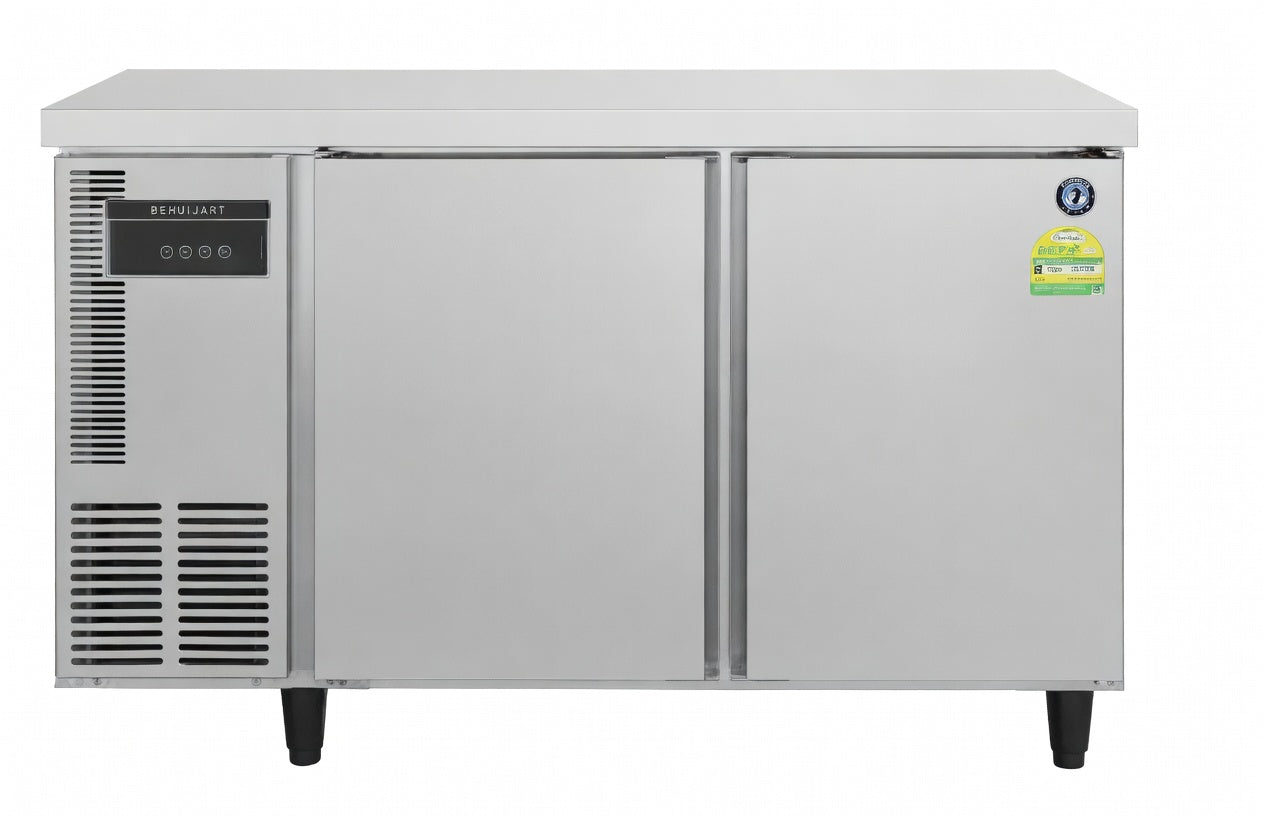
Which refrigerant should you choose, and when?
Match the refrigerant to the application and ambient profile rather than defaulting to whichever is currently fashionable in trade press.
- Low-charge commercial display refrigeration and prep-line chillers: R290 is generally the stronger specification, given its efficiency at typical kitchen ambient temperatures and lower GWP exposure to future regulation.
- Larger centralised chillers or regulated RAC equipment: check NEA’s GWP limits for that equipment category before specifying anything, since the regulatory ceiling may rule out high-GWP options regardless of preference.
- Low-ambient or cold-climate heat pump applications: model performance at your actual operating temperature. R134a’s COP can match or beat R290 below roughly 15°C.
- Any flammable-refrigerant installation: confirm in-house or contracted service capability includes certified hydrocarbon-competent technicians before committing.
Immediate next step for most buyers replacing ageing R134a stock: pilot one R290-rated unit on a self-contained application, verify NEA registration status for the installer, and confirm charge limits against your building’s fire-safety category before scaling the rollout further.
How does Superiorkitchenequipment support the low-GWP transition?
Superiorkitchenequipment stocks energy-efficient commercial refrigeration built around exactly this shift, with guidance on claiming government energy-efficiency grants that can offset up to 70% of the original equipment cost. The catalogue spans display chillers, combination units, and standing chillers, the equipment categories where R290’s low-charge design fits most naturally.
- Self-contained double glass door standing chillers suit low-charge refrigerant applications
- Four-door chiller and freezer combinations cover higher-capacity kitchen needs
- Showroom visits let buyers inspect compressor specification and build quality directly before committing
What the data actually tells decision-makers
Most procurement conversations about R290 versus R134a get stuck on GWP headlines and skip the part that actually determines whether a project succeeds: ambient temperature profile and service capability. The efficiency case for R290 is real, but it’s conditional. Below roughly 15°C, R134a can hold its own or win outright, a nuance that rarely survives the trip from peer-reviewed paper to sales brochure.
The bigger gap I’d flag is in how retrofit cost gets estimated. Compressor and evaporator swaps get quoted properly; detection, ventilation, and certified housing upgrades often get treated as afterthoughts, when in practice they’re a substantial share of what makes an R290 conversion compliant rather than merely functional. Budget for that from day one, not as a change order once SCDF review flags a gap.
What I’d prioritise first isn’t the refrigerant choice at all. It’s matching the application’s ambient range and service capability to whichever refrigerant fits it, then letting the GWP and efficiency numbers confirm the decision rather than drive it. Buyers who reverse that order tend to end up specifying a fashionable refrigerant for the wrong climate.
— David
Ready to specify low-GWP refrigeration for your kitchen?
Superiorkitchenequipment gives you a direct route to R290-compatible commercial chillers without the guesswork of retrofitting an existing R134a system, and without committing to equipment before you’ve checked it against your ambient range and compliance needs.
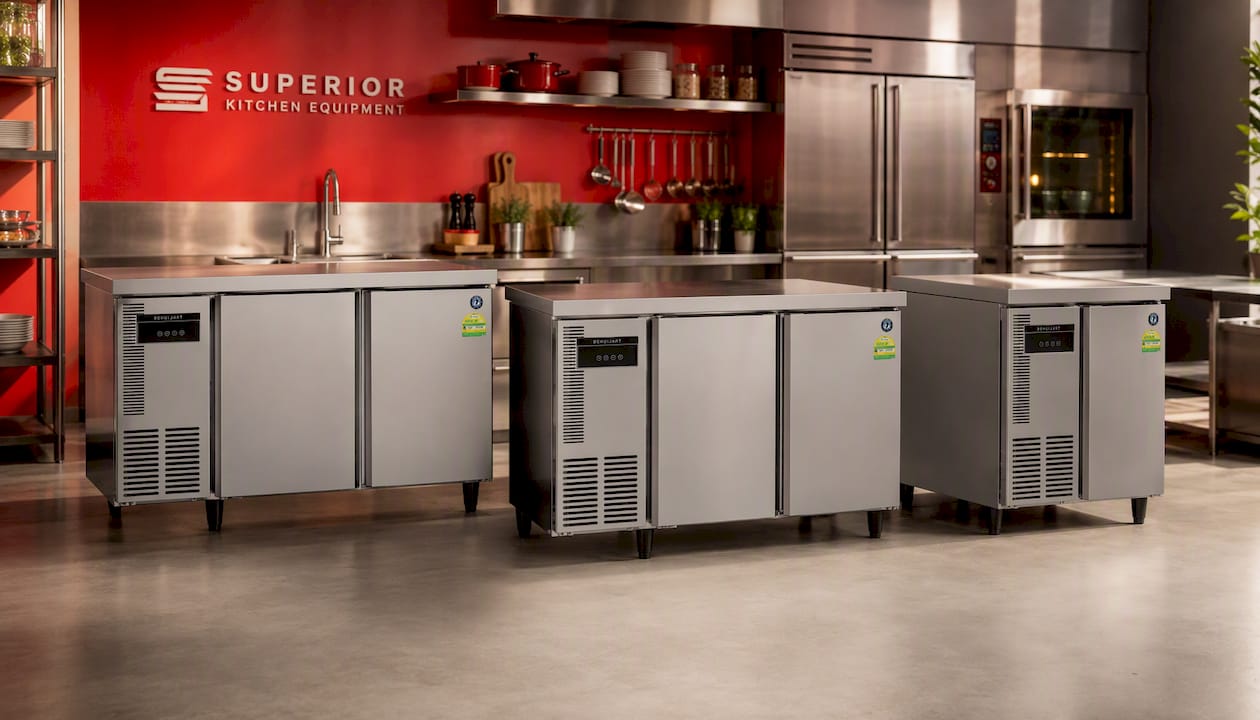
If you’re replacing ageing counter refrigeration, the 1.2m Hoshizaki Counter Chiller and its 75cm variant both suit self-contained, low-charge applications, while the 1.5m Hoshizaki Counter Chiller covers higher-volume kitchens needing more capacity. Visit the showroom to inspect compressor specification and charge documentation in person, or request a site assessment to confirm which model fits your space, ambient conditions, and NEA registration status before you order.
Sources
- Experimental study of R290 replacement R134a in cold storage air conditioning system
- R290 Refrigerant Benefits - Norlake
- NEA guidance on reducing GHG emissions from refrigerants
- SCDF appendix on flammable refrigerants and policy (fire-code appendix)