

For most restaurants, upgrading refrigeration and switching to induction or combi ovens delivers the largest energy savings and the fastest payback. Add efficient dishwashers and hot-holding cabinets once those two categories are covered. Combined with Singapore’s Energy Efficiency Grant, good specification checks, and correct daily operation, this sequence typically produces lower electricity bills within one to three years, with a full checklist and product examples below.
TL;DR:
- Continuous-running refrigeration offers the largest energy savings, especially when equipped with inverter compressors, thicker insulation, and tight door seals.
- Upgrading to induction cooktops and combi ovens with fast heat recovery can significantly reduce kitchen energy consumption and improve overall efficiency.
- Prioritizing equipment in the food service sector based on verified energy consumption figures, standby power, and recovery times helps maximize the return on investment and grant eligibility.
- Regular operational practices like cleaning coils, checking gaskets, and batching cooking can cut immediate energy use without capital upgrades.
- Refrigeration systems should be the first priority for upgrades due to their constant operation and large lifetime energy costs, amplified by the potential for grants to offset purchase expenses.
Table of Contents
- Which energy efficient kitchen equipment saves the most?
- What does the business case actually look like?
- How do you choose between models and vendors?
- What operational habits cut energy use immediately?
- How Superior Kitchen Equipment supports your purchase decision
- Where operators get their priorities wrong
- Ready to specify your next upgrade?
- Sources
- FAQ
Which energy efficient kitchen equipment saves the most?
Refrigeration runs continuously, which is exactly why it offers the biggest efficiency gains of any category. A commercial fridge with an inverter compressor adjusts its motor speed to match the cooling load rather than switching fully on and off, cutting the number of compressor cycles and the electricity spent restarting the motor each time. Thicker insulation and tighter door seals reduce heat gain further, and a night blind pulled down over open display units after closing can meaningfully cut overnight energy draw.
Induction cooktops transfer heat directly into the pan through a magnetic field rather than heating a coil or flame first, so far less energy escapes into the surrounding kitchen air. Combi ovens recover heat faster between batches than standard gas or electric ovens, which matters most in kitchens running back-to-back service.
Other equipment worth checking:
- Commercial dishwashers with heat recovery reuse waste heat from drained water to preheat the next wash cycle.
- Modern fryers and steamers often include better burner or element design that shortens recovery time between batches.
- Hot-holding cabinets with improved insulation hold temperature with less continuous power draw.
When comparing models, look past the price tag to the kWh/24h figure and standby power draw listed on the data sheet. Two fridges of the same size can differ by a wide margin in energy consumption, and the ENERGY STAR commercial food service equipment guidance explains how certified units use these figures to demonstrate lower utility and maintenance costs over time.
What does the business case actually look like?
Total cost of ownership is a simple sum: purchase price, plus projected energy cost over the equipment’s working life, plus expected maintenance. Vendor kWh figures let you multiply daily consumption by your electricity tariff and operating hours to estimate annual running cost before you commit to a model.
Refrigeration usually dominates that lifetime figure, because it runs 24 hours a day, every day, unlike an oven or fryer that only draws power during service hours. A fridge with a marginally higher purchase price but a meaningfully lower kWh/24h rating often overtakes a cheaper unit within a few years of continuous use.
Three checks before you buy:
- Confirm the equipment category is listed under the Food Services Sector Energy Efficiency Grant, which supports upgrades for foodservice businesses in Singapore.
- Cross-check the NEA’s guidance on buying energy-efficient appliances for labelling and behavioural measures that influence approval.
- Ask for documented test reports or energy declarations, since grant and rebate calculations depend on verified figures rather than marketing claims.
Grants can cover a significant portion of the equipment’s original cost under Singapore’s Energy Efficiency Grant scheme, which is why documented energy performance data matters as much as the sticker price. Independent usage-cost data, such as the annual figures Consumer Reports publishes for household appliances, illustrates the same principle at a smaller scale: model choice alone can shift running costs substantially over a comparable lifespan.
How do you choose between models and vendors?
Ask every vendor for the same set of figures, so comparisons are fair rather than based on marketing language.
- Daily energy consumption (kWh/24h) under standard load conditions.
- Compressor type (inverter versus fixed-speed) for any refrigeration unit.
- Insulation thickness and door seal specification.
- Standby power draw when the unit is idle but running.
- Recovery time between cooking or wash cycles.
- Local service network coverage and average call-out response time.
Then ask the vendor directly: how was the energy figure tested, and by whom? What warranty applies to the compressor or heating element specifically, not just the cabinet? Can they help with the paperwork for a grant or rebate application?
For high-volume kitchens running continuous service, prioritise recovery time and compressor durability over sticker price. For low-volume operations, standby draw and insulation quality often matter more, since the unit spends more time idling than working.
Pro Tip: If a vendor cannot produce a kWh/24h figure or a written test report on request, treat that as a red flag rather than an oversight. Verify any unusually generous rebate offer through an official channel such as ScamShield before paying a deposit.
What operational habits cut energy use immediately?
Capital upgrades take time to plan and fund. These practices reduce consumption from tomorrow.
- Clean condensing coils weekly. Dust and grease build-up forces a fridge compressor to work harder to reach the same temperature.
- Check door gaskets monthly. A worn seal lets cold air escape constantly, and the compressor cycles far more often to compensate.
- Avoid overfilling refrigeration units. Blocked airflow around stored items makes the compressor run longer for the same result.
- Batch cooking tasks and match induction zones to pan size. Running fewer, fuller cycles cuts total burner or element time.
- Coordinate ventilation with variable-speed fans. Pulling unnecessary make-up air conditions more outside air than the kitchen needs.
Efficiency is rarely down to one appliance. Pairing efficient equipment with sensible ventilation, LED lighting, and a consistent servicing schedule protects the savings you paid for and extends the working life of every unit on the line.
How Superior Kitchen Equipment supports your purchase decision
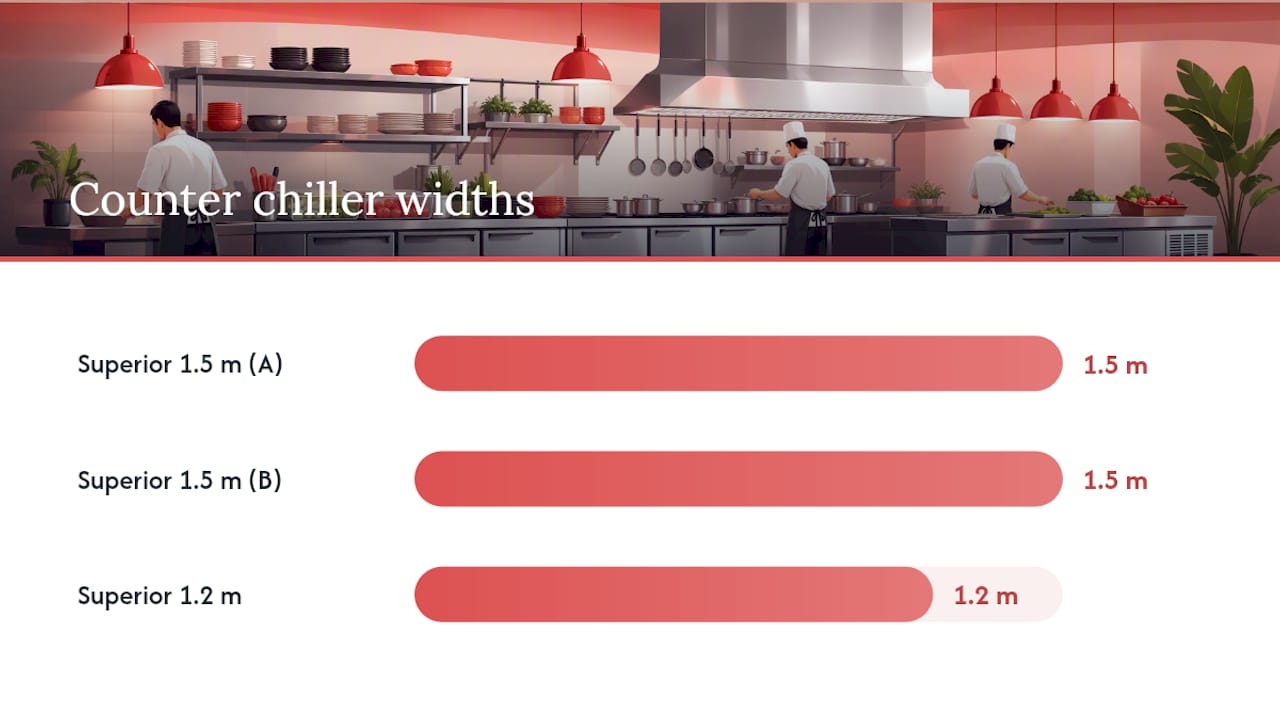
Some kitchen equipment suppliers specialise in energy-efficient appliances for the foodservice industry and operate showrooms where customers can inspect models before committing. Seeing a compressor housing, door seal, or insulation panel in person tells you far more than a spec sheet alone.
Three in-market refrigeration units worth reviewing as concrete examples:
- The 1.5m Superior Inverter Counter Chiller / Freezer, built around an inverter compressor for continuous-use kitchens.
- A second listing for the same 1.5m inverter counter chiller, useful for comparing configuration options.
- The 1.2m Superior Inverter Counter Chiller / Freezer, sized for smaller prep stations or tighter kitchen footprints.
Some suppliers provide energy spec sheets and guidance on grant eligibility for the equipment they sell. Request the spec sheet before you finalise a purchase, particularly if a grant application depends on documented energy figures.
Where operators get their priorities wrong
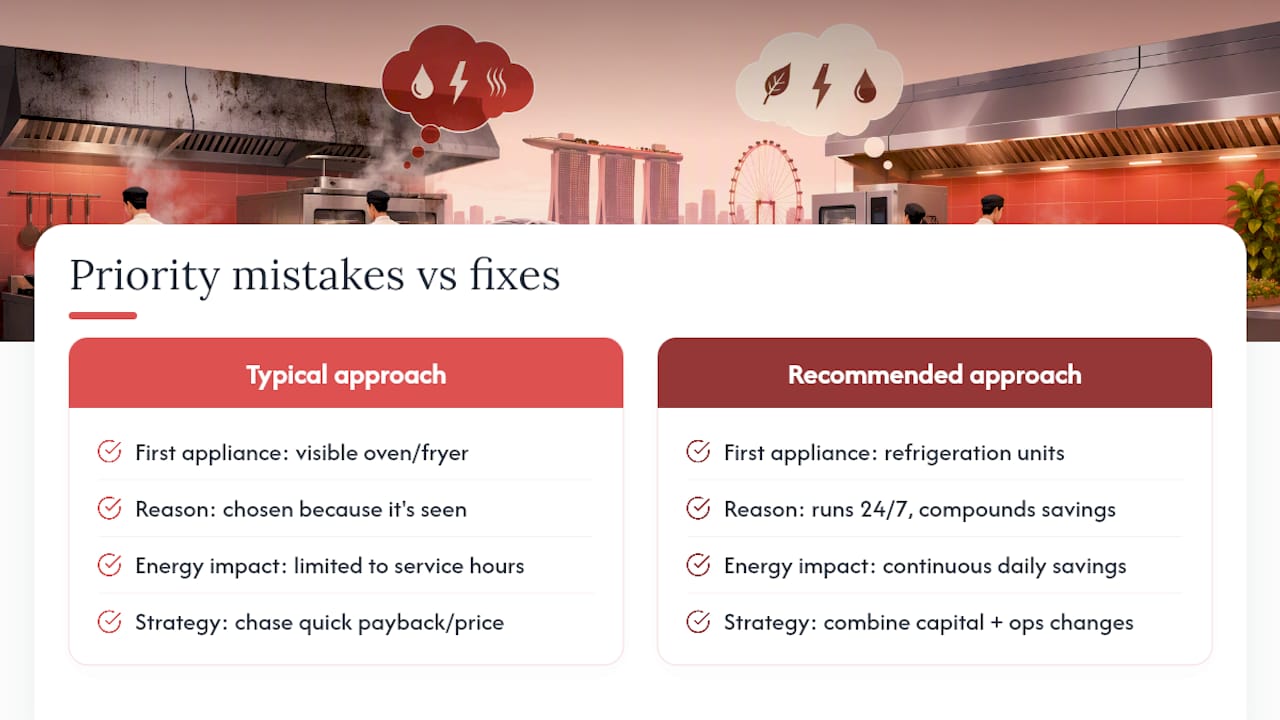
Most kitchens chase the most visible appliance first, usually the oven or fryer everyone sees in daily service, and leave refrigeration for later. That’s backwards. Refrigeration runs every hour of every day, so its efficiency gap compounds continuously while an oven’s gap only shows up during service hours.
The strongest results come from combining a capital upgrade with the operational changes covered above; neither alone captures the full saving. Plan the purchase timeline around grant eligibility windows and a vendor’s service network, not just the unit price, because a fast payback on paper means little if a breakdown takes weeks to resolve.
— David
Ready to specify your next upgrade?
If you’ve been comparing spec sheets and grant rules on your own, the next step is simpler than it looks: request the actual energy figures and rebate guidance directly from a supplier who sells the equipment, rather than piecing it together from marketing brochures. Some suppliers offer foodservice operators showroom access to inspect compressors, seals, and insulation firsthand, plus spec sheets you can use for a grant application.
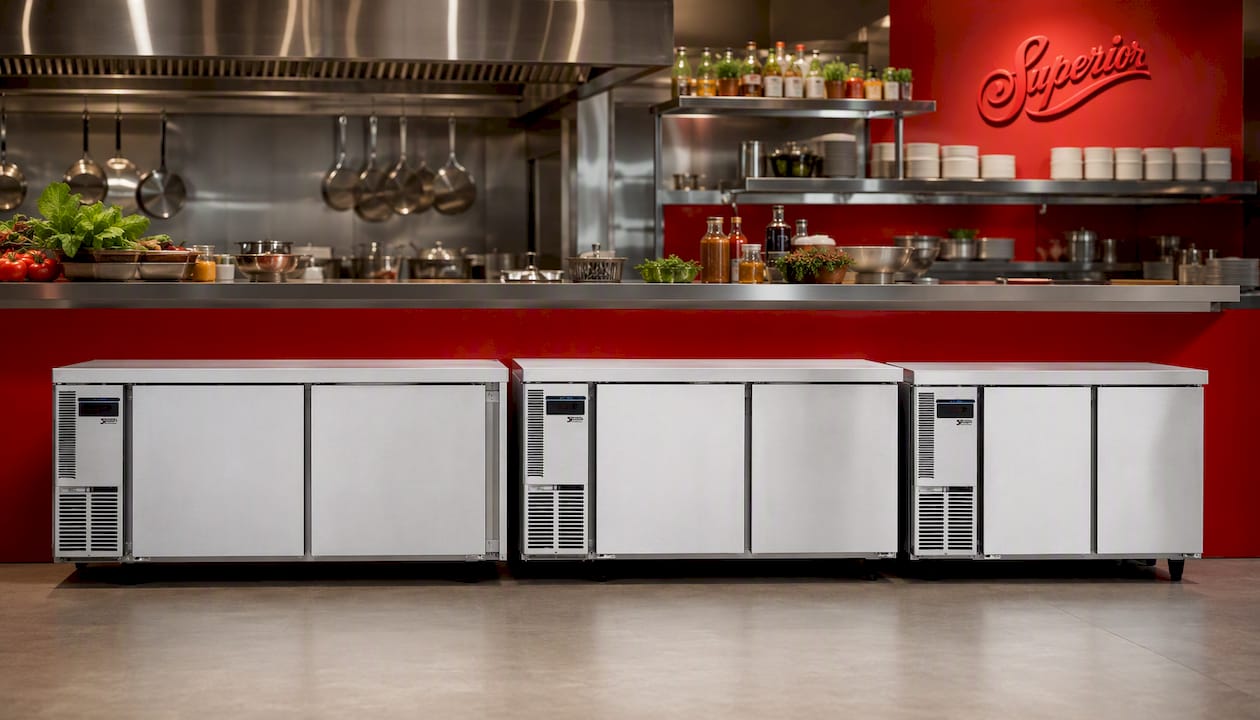
Start with refrigeration, since it carries the biggest lifetime energy cost. The 1.5m Superior Inverter Counter Chiller / Freezer and the 1.2m Superior Inverter Counter Chiller / Freezer are both in-market examples worth requesting a spec sheet for. If your kitchen is also due for an oven upgrade, the electric convection oven range is worth a look on the same visit. Book a showroom demo, ask about grant eligibility for your specific model, and request a written quote before you commit.
Sources
- Food Services Sector (EEG)
- Tips on Buying Energy-Efficient Appliances
- Top-Rated Appliances That Won’t Hike Your Utility Bill - Consumer Reports
FAQ
What are the most energy-efficient kitchen appliances?
Inverter-compressor refrigeration, induction cooktops, and combi ovens with fast heat recovery are the categories that deliver the biggest measurable savings in a commercial kitchen.
What cooking appliance uses the least electricity?
Induction cooktops generally use less electricity than gas or standard electric coil cooking because they transfer heat directly into the pan rather than heating an element first.
What appliance is the biggest energy waster?
Ageing refrigeration units without inverter compressors or with worn door seals tend to waste the most energy, since they run continuously and cycle far more often than necessary.
What kitchen appliance takes the most electricity to run?
Refrigeration typically consumes the most electricity over a year simply because it runs 24 hours a day, unlike ovens, fryers, or dishwashers that only draw power during service.
How much can grants reduce the cost of new equipment?
Singapore’s Energy Efficiency Grant for the food services sector can cover a significant portion of the original equipment cost, provided the model meets the scheme’s documented energy criteria.